



Birding in Fraser’s Hill
Fraser’s Hill is simply the best place for birding in Peninsular Malaysia. If you are doing a tour of the country specifically focused on ornithology, this is a must-visit stop. It’s no coincidence that many birdwatching events are organized here every year.
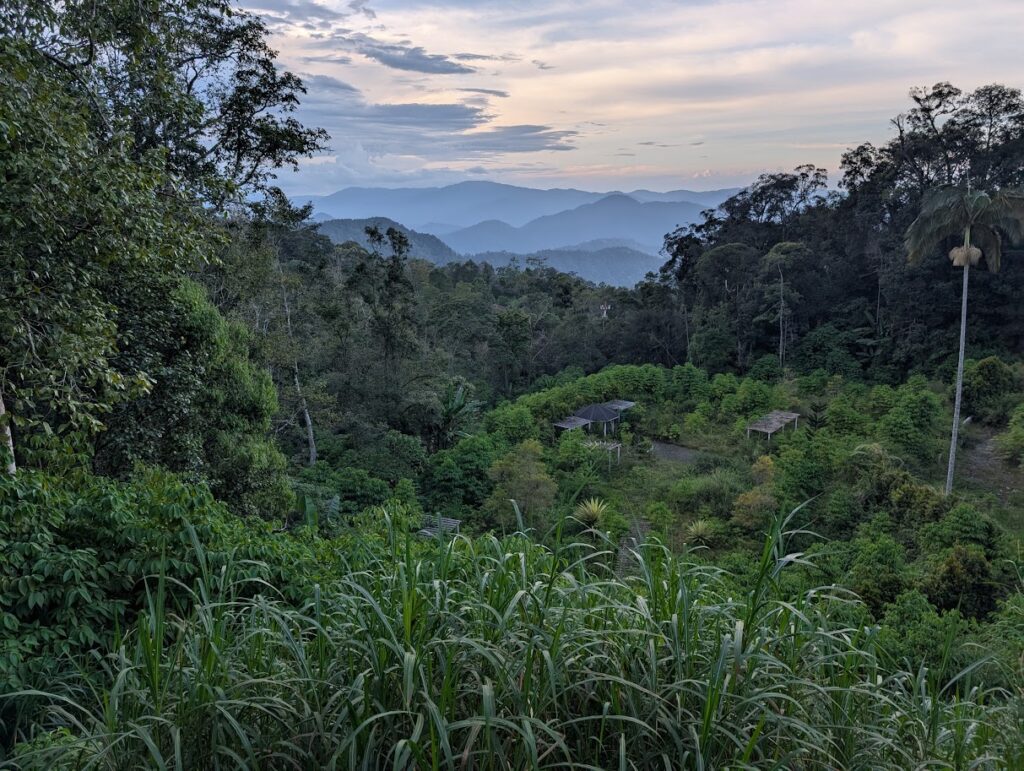
Spread across different altitudes, the diversity of birds is impressive. Birding here is relatively easy as birds can often be found along the roads, in the open, and sometimes in mixed-species flocks. The weather at Fraser’s Hill is very variable. It can be foggy early in the morning, but the clouds usually clear after a few hours. ☁️
Where to see birds at Fraser’s Hill?
Fraser’s Hill is teeming with birds everywhere. It’s impossible to make an exhaustive list of all the species found here due to the number of rarities that appear each year. However, I will present the main birding spots in this vast area and the species you can expect to see.
Telekom Loop
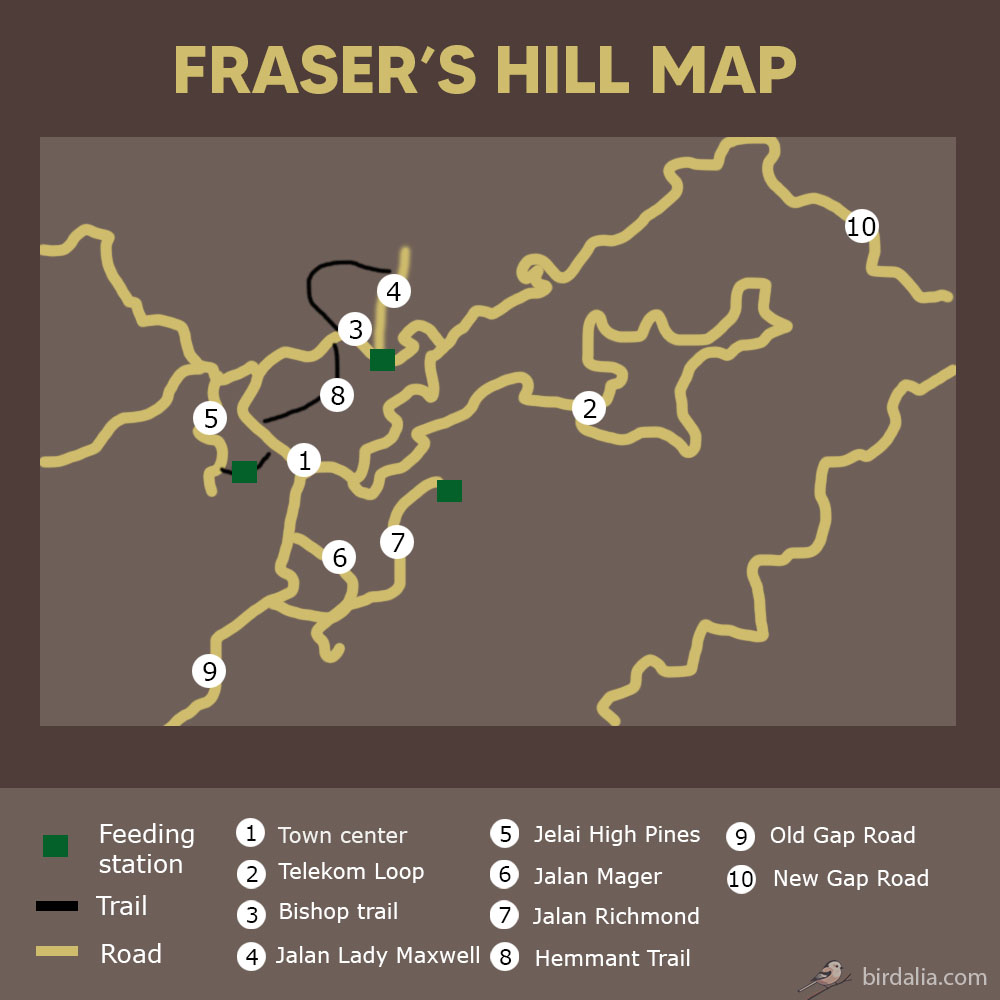
Let’s start with Fraser’s Hill’s most famous loop: Telekom Loop. Covering 3.5 km, you can do this loop on foot or by car. But be careful if you drive, it is one-way traffic only. I personally prefer to do the loop entirely on foot, as it avoids engine noise and makes it easier to hear the birds.
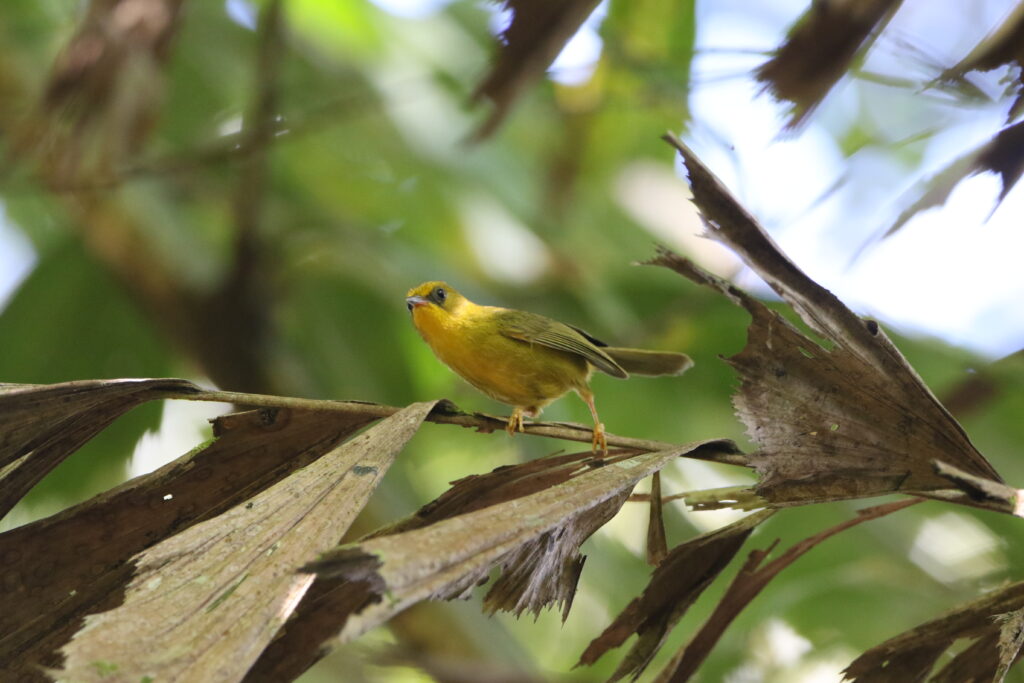
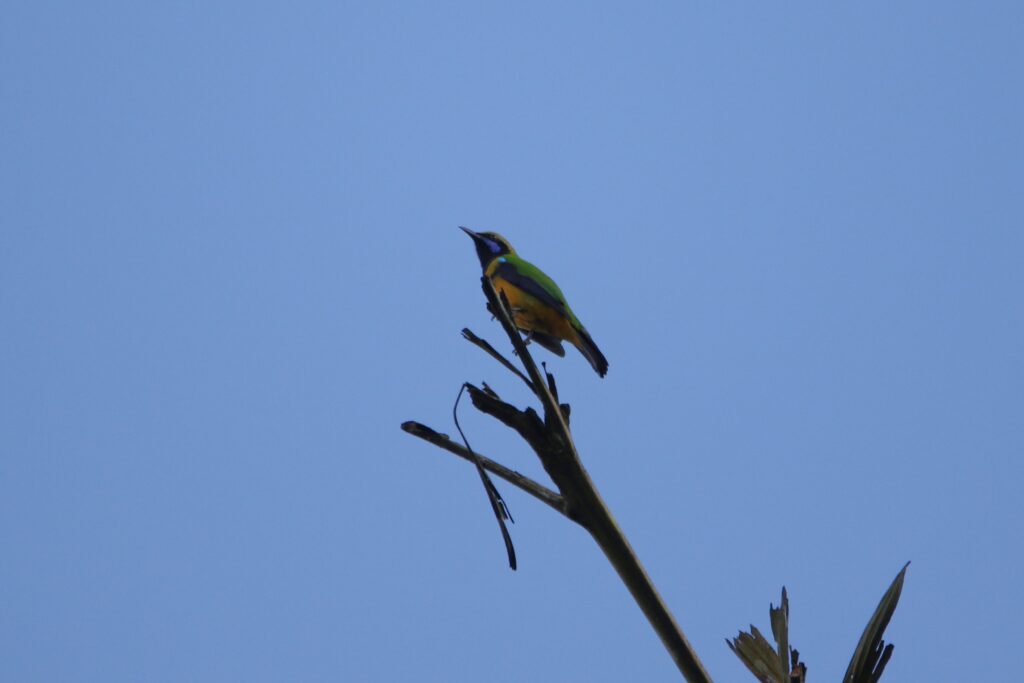
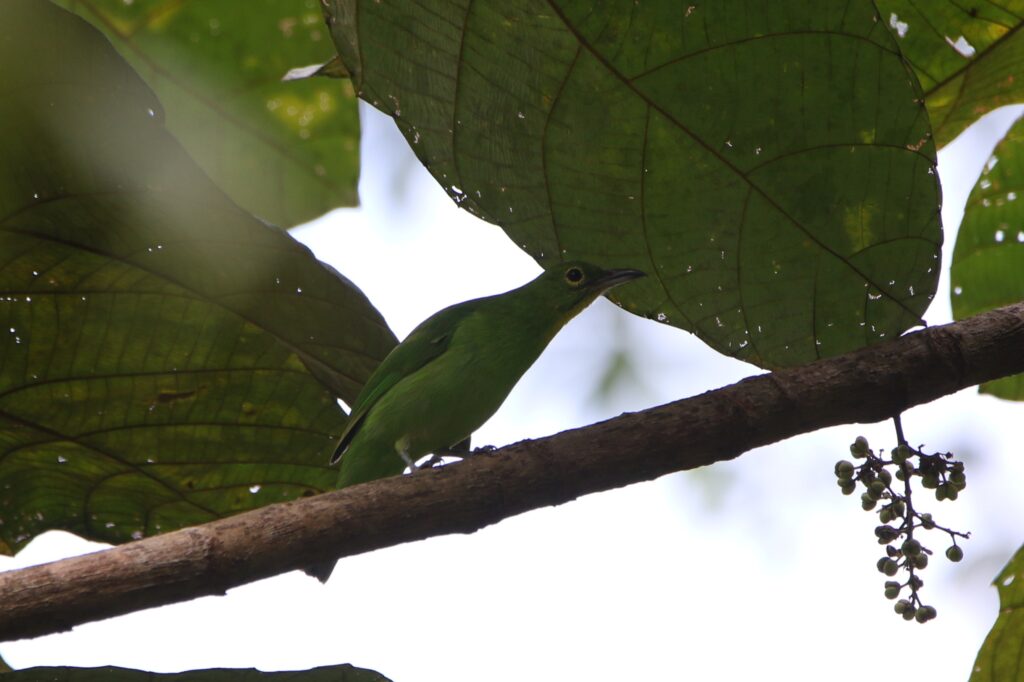
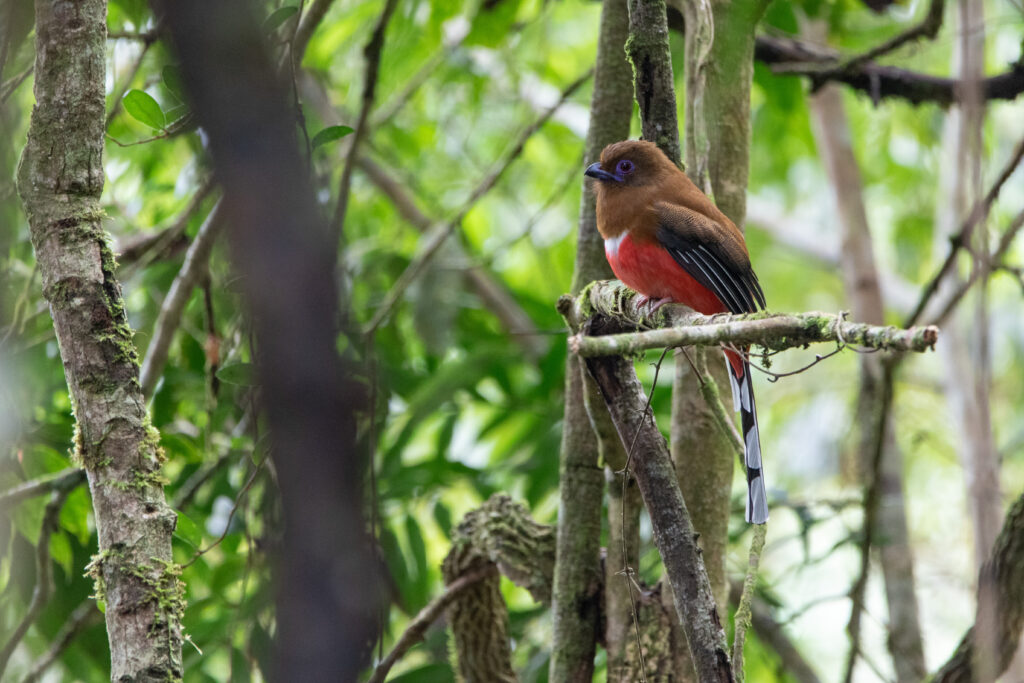
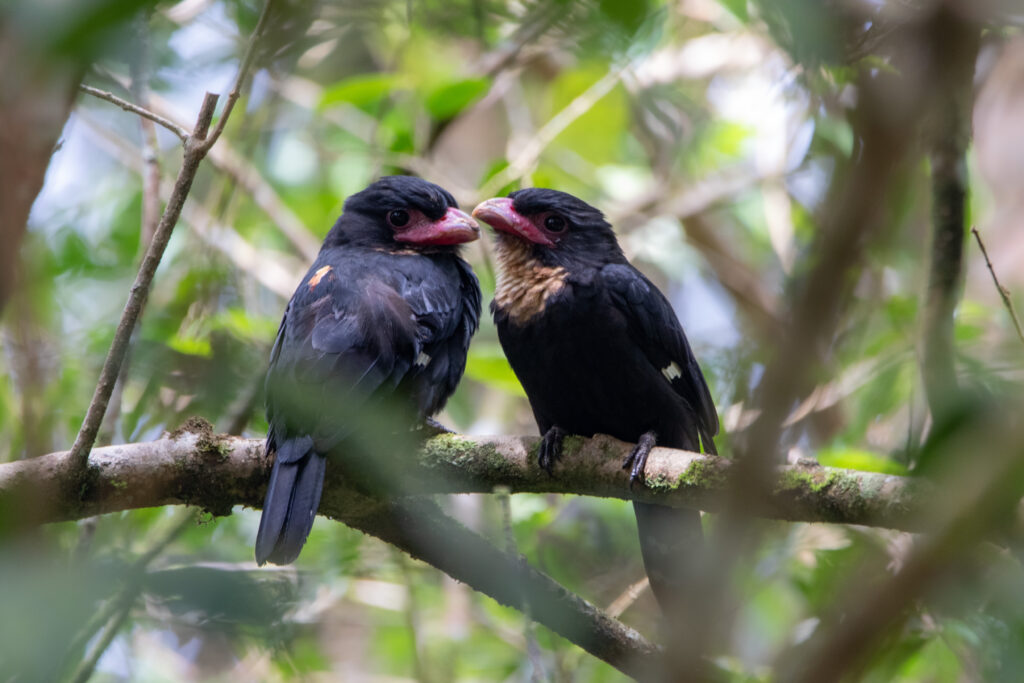
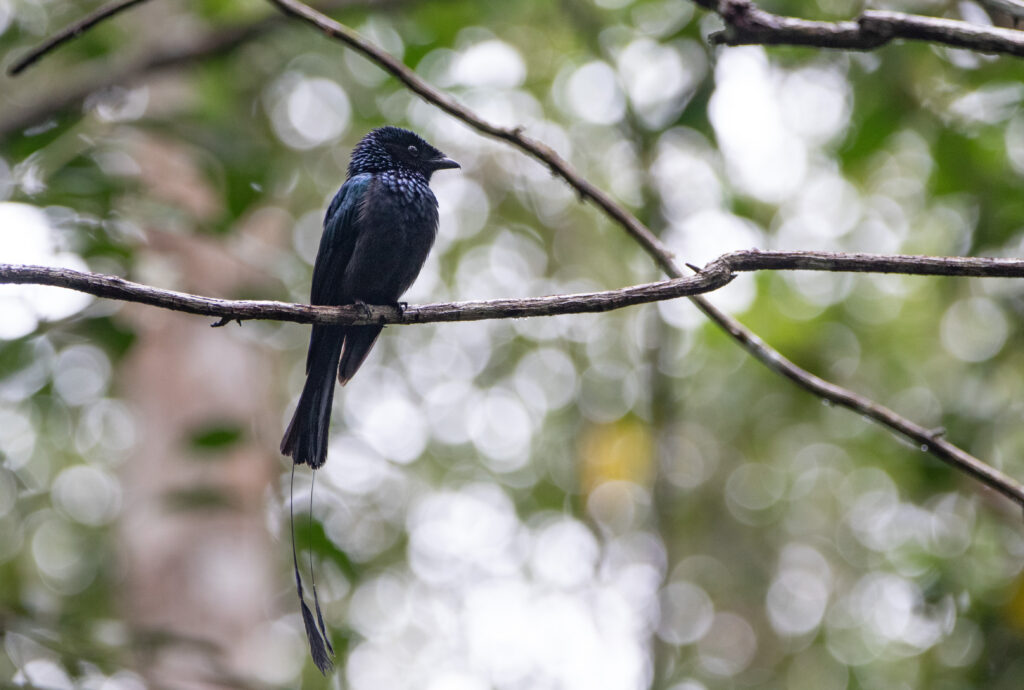
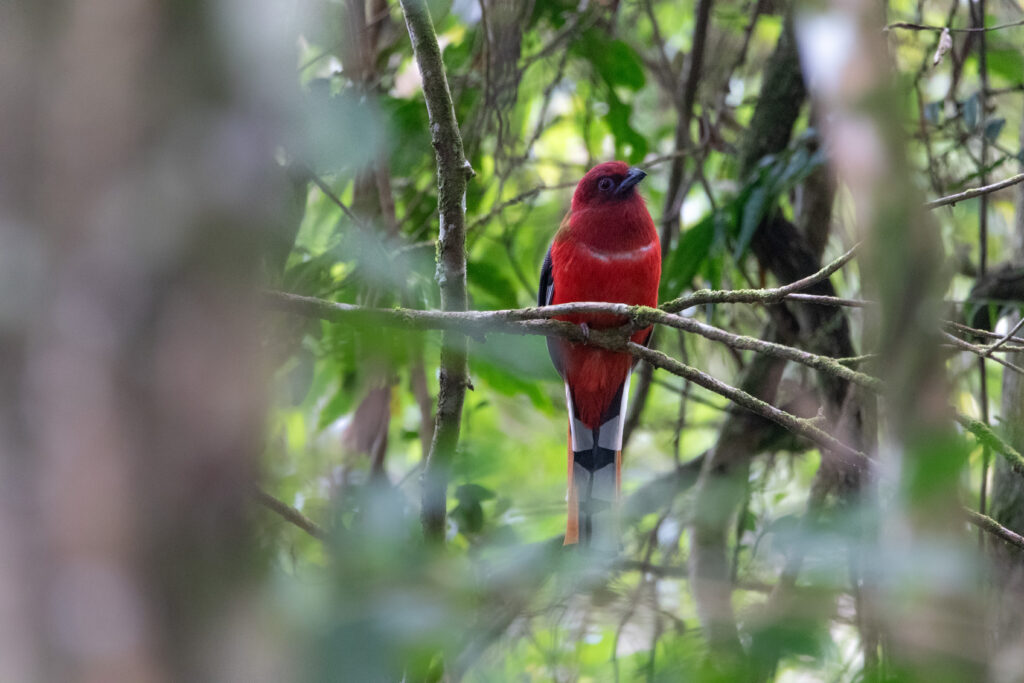
If you start early in the morning, you will very likely see Siberian Thrush (Geokichla sibirica) wandering along the path. Among the key species of the loop are Red-headed Trogon (Harpactes erythrocephalus), Lesser Racket-tailed Drongo (Dicrurus remifer), and more rarely Crow-billed Drongo (Dicrurus annectens). I also observed a nice flock of Dusky Broadbill (Corydon sumatranus) in this area. In mixed-species flocks, you can look for Lesser Green Leafbird (Chloropsis cyanopogon), Orange-bellied Leafbird (Chloropsis hardwickii), White-bellied Erpornis (Erpornis zantholeuca), or Golden Babbler (Cyanoderma chrysaeum).
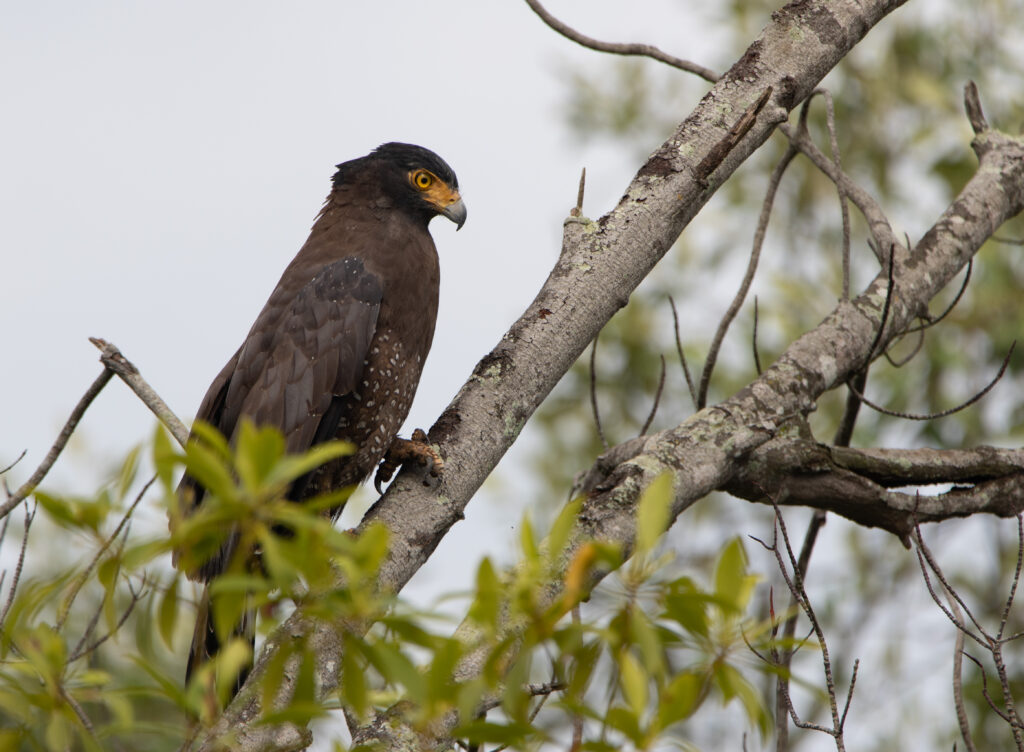
If the view is clear and you can see the surroundings (which is not always the case at Fraser’s Hill), you can try spotting raptors such as Crested Serpent Eagle (Spilornis cheela) or Wallace’s Hawk-Eagle (Nisaetus nanus). Some hornbills like Wreathed Hornbill (Rhyticeros undulatus), Rhinoceros Hornbill (Buceros rhinoceros), Bushy-crested Hornbill (Anorrhinus galeritus), or Great Hornbill (Buceros bicornis) can also be found in the area.



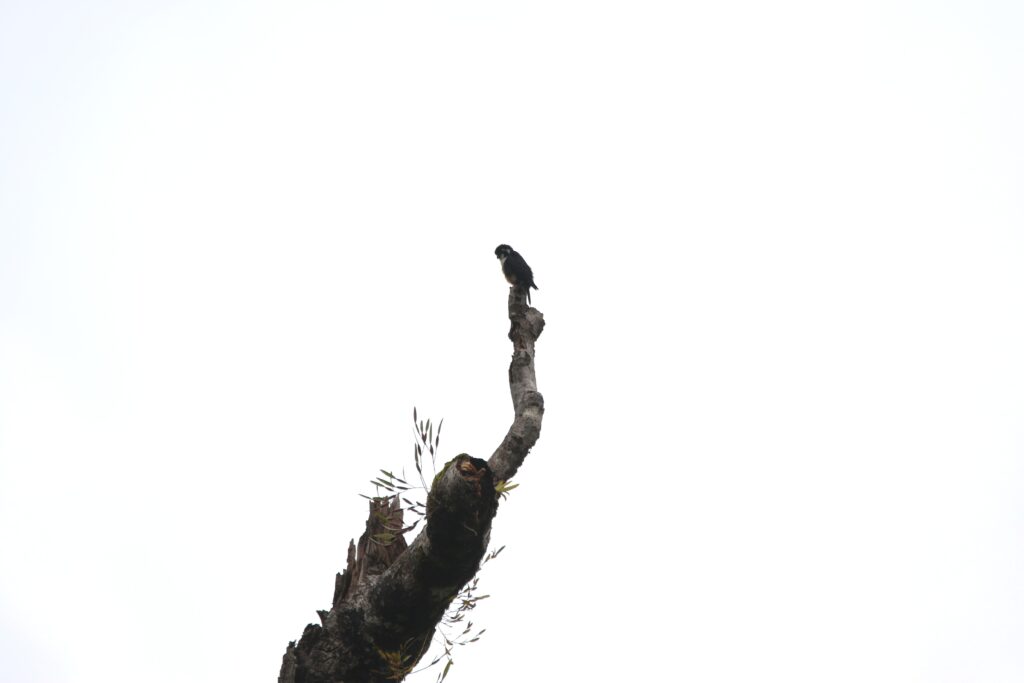
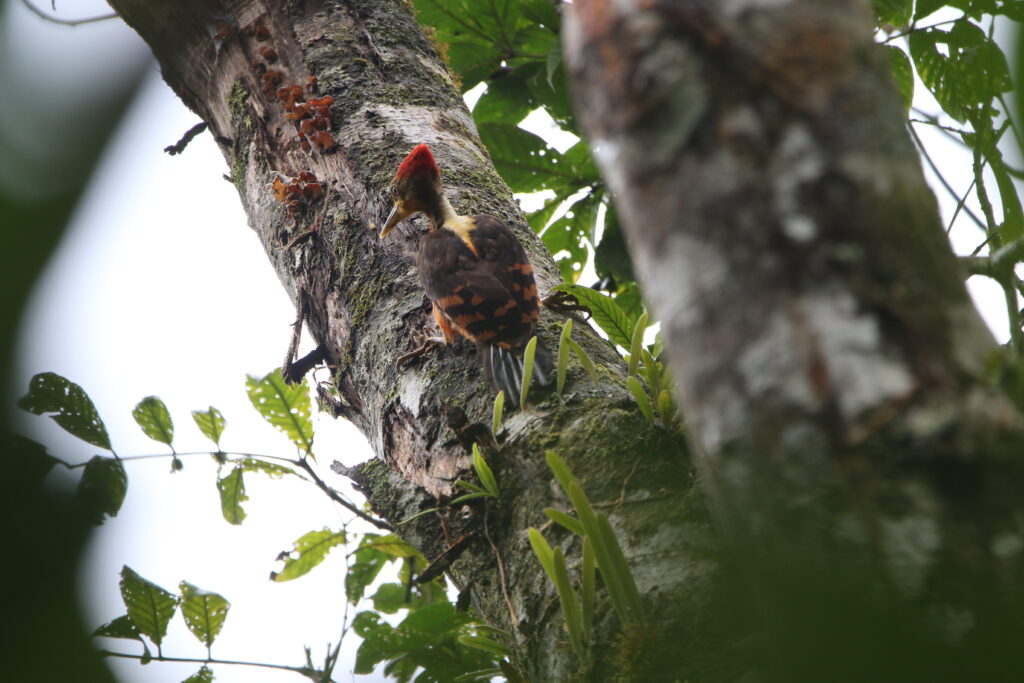
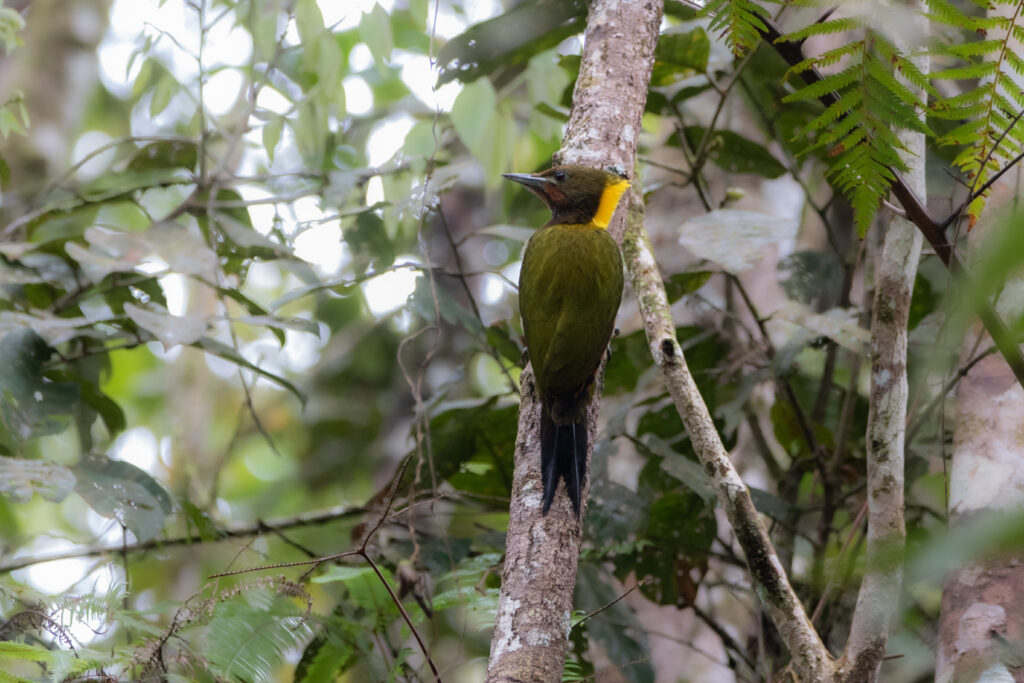
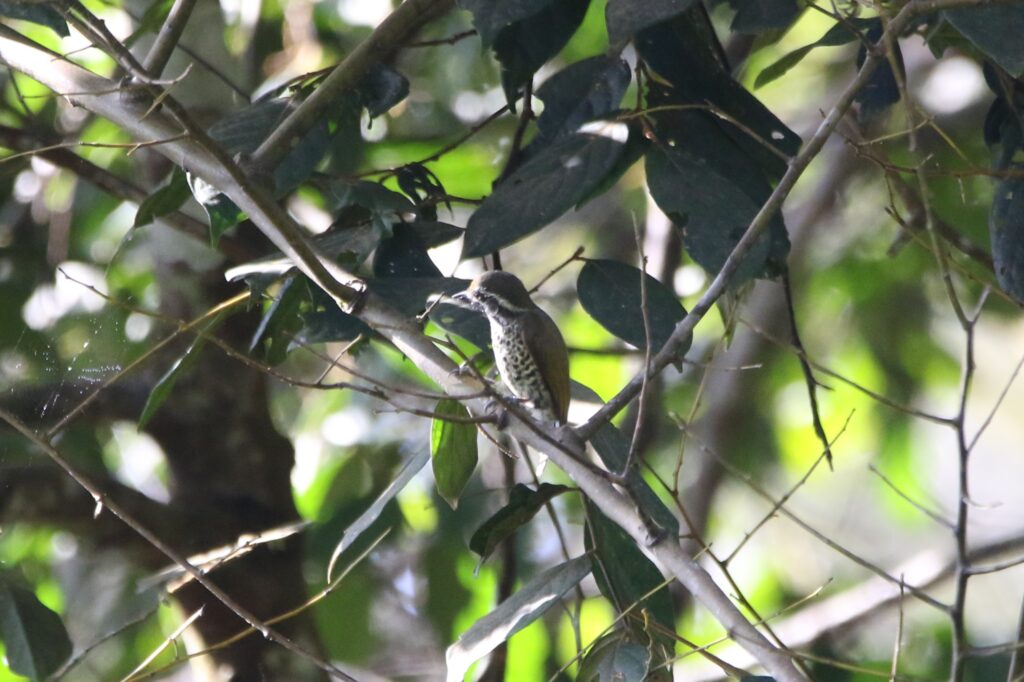
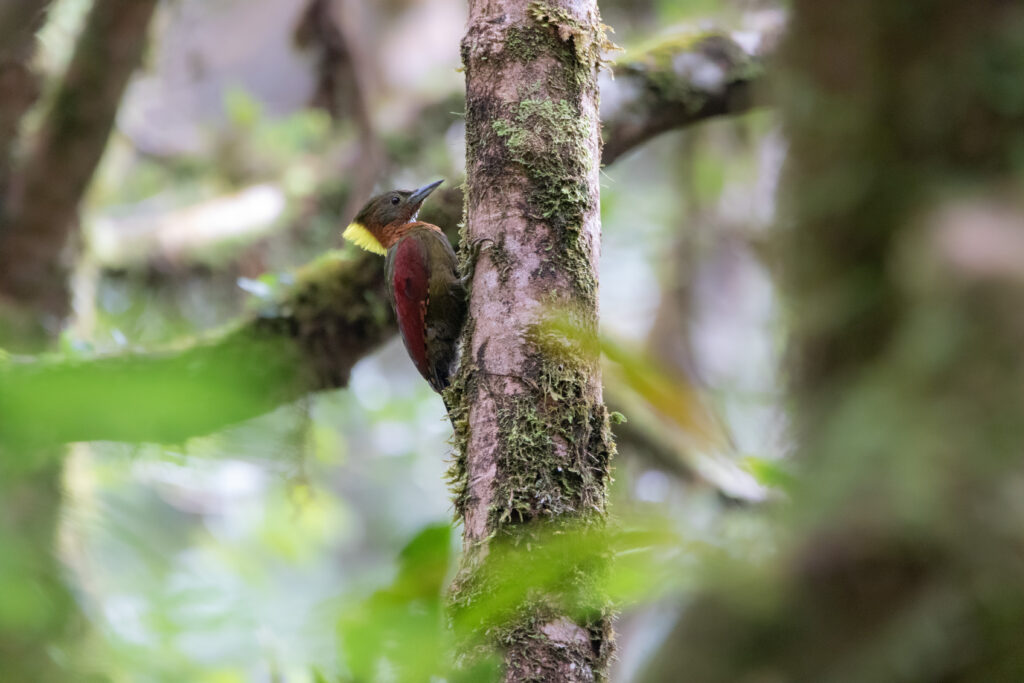
Also try to spot dead trees to locate a woodpecker’s nest. You might see Speckled Piculet (Picumnus innominatus), Maroon Woodpecker (Blythipicus rubiginosus), Orange-backed Woodpecker (Chrysocolaptes validus), Greater Yellownape (Chrysophlegma flavinucha), or Checker-throated Woodpecker (Chrysophlegma mentale). It is also possible to see Black-thighed Falconet (Microhierax fringillarius) perched atop dead trees.

Bishop Trail
The Bishop Trail is located in the upper part of Fraser’s Hill and is about 1.5 km long. The first part of the trail descends to a first hut. Then it is relatively flat until a second hut before you need to climb back to the road. During heavy rain, the path becomes very wet and difficult to navigate. The vegetation is dense and dark, making bird identification sometimes more challenging.
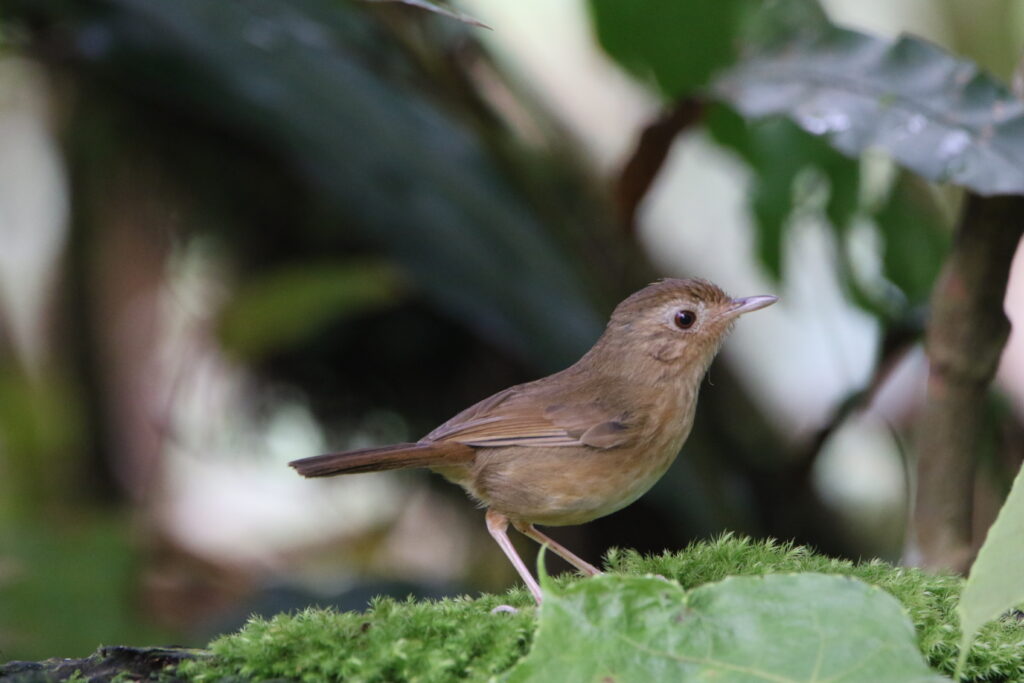
Despite this, the area is excellent for observing rare birds. You can see Golden Babbler (Cyanoderma chrysaeum), Grey-throated Babbler (Stachyris nigriceps), Buff-breasted Babbler (Pellorneum tickelli), Mountain Fulvetta (Alcippe peracensis), and Streaked Wren-Babbler (Gypsophila brevicaudata).
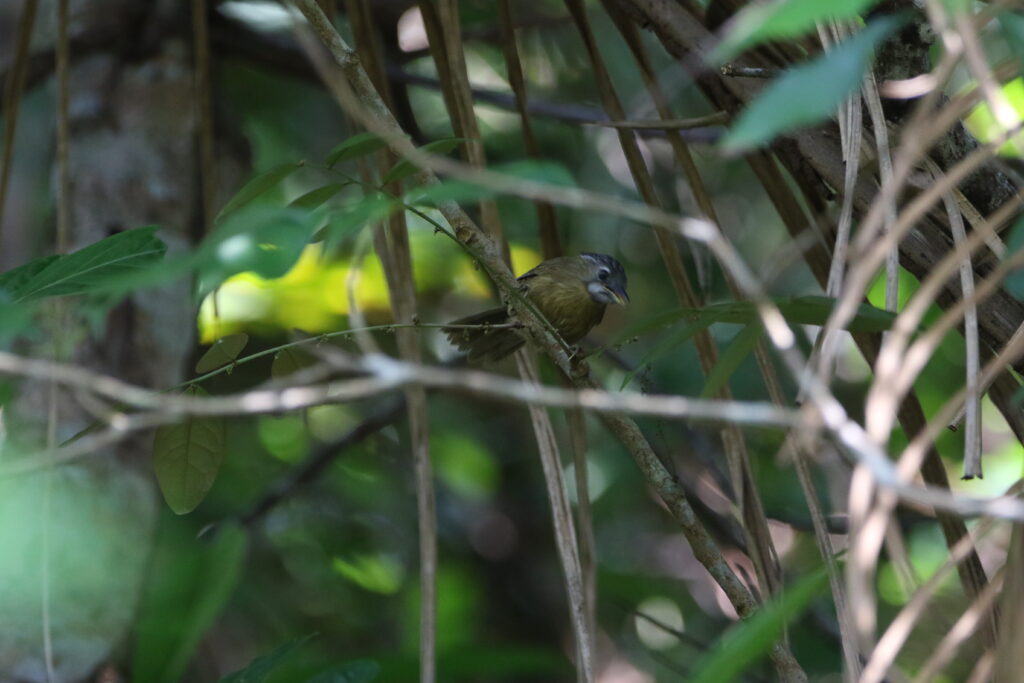
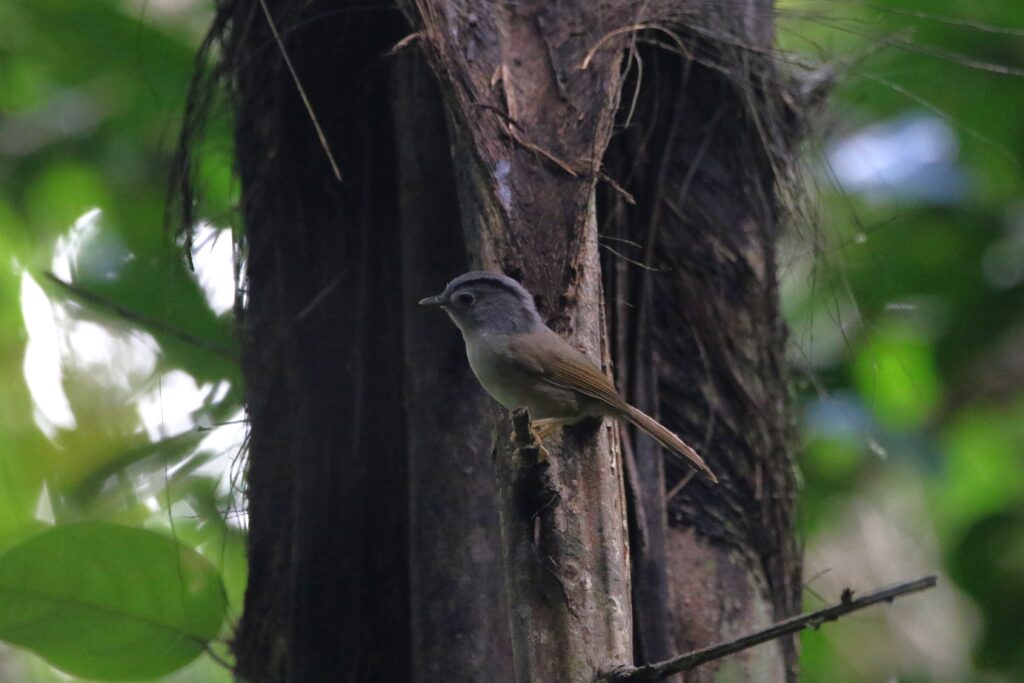
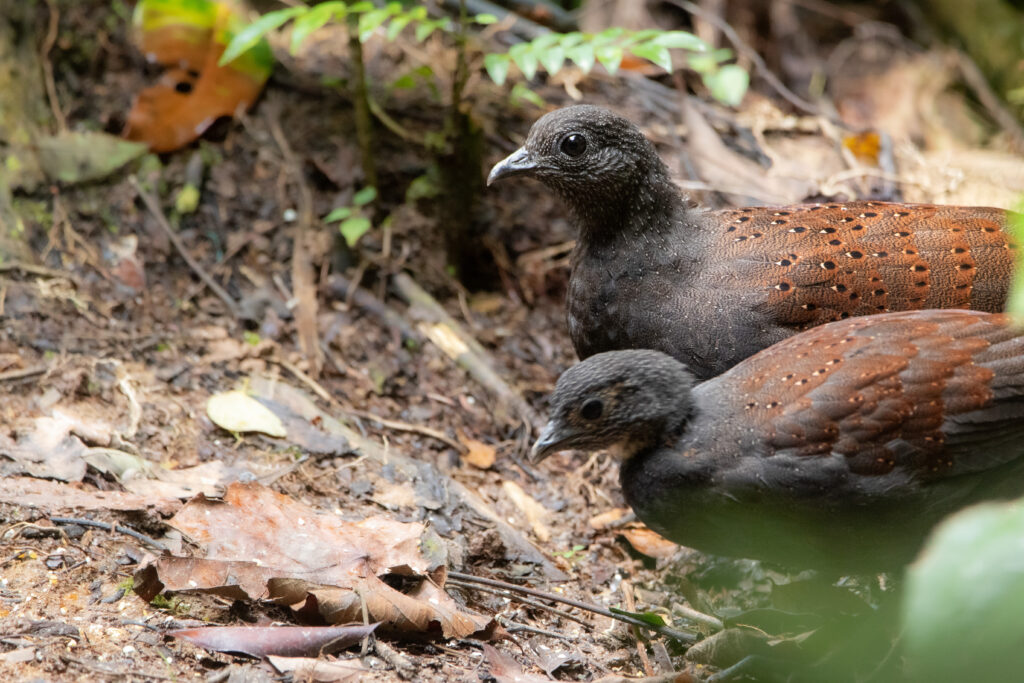
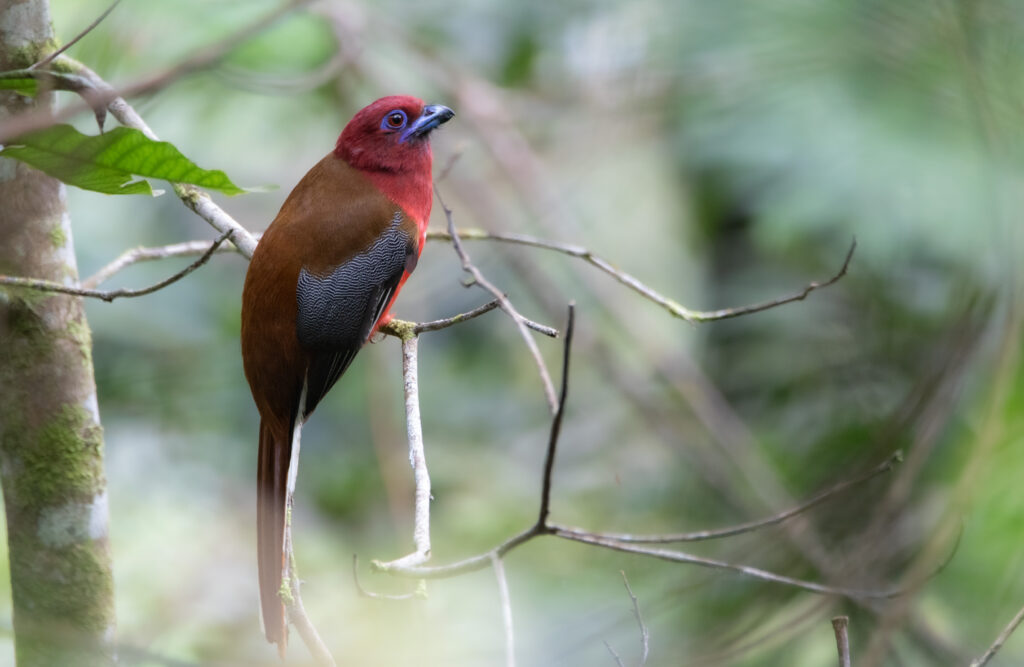
If you are lucky, you might hear, and perhaps even see, Rusty-naped Pitta (Hydrornis oatesi). With even more luck, you could encounter Mountain Peacock-Pheasant (Polyplectron inopinatum). And if luck is not on your side, you can still enjoy the beautiful Red-headed Trogons (Harpactes erythrocephalus) at the trail entrance. This area is also a place where you can hear Siamang!
Jalan Lady Maxwell
This is the paved road starting from the beginning of Bishop’s Trail and continuing to the end of the trail (and even a little beyond). Compared to Bishop Trail, the visibility here is much better. You can therefore spot mixed-species flocks passing through in the morning more easily. The rest of the day tends to be much quieter.
Among the birds you may see here are Green-billed Malkoha (Phaenicophaeus tristis), Black-browed Barbet (Psilopogon oorti), Grey-chinned Minivet (Pericrocotus solaris), White-browed Shrike-Babbler (Pteruthius aeralatus), Black-eared Shrike-Babbler (Pteruthius melanotis), and Sultan Tit (Melanochlora sultanea).
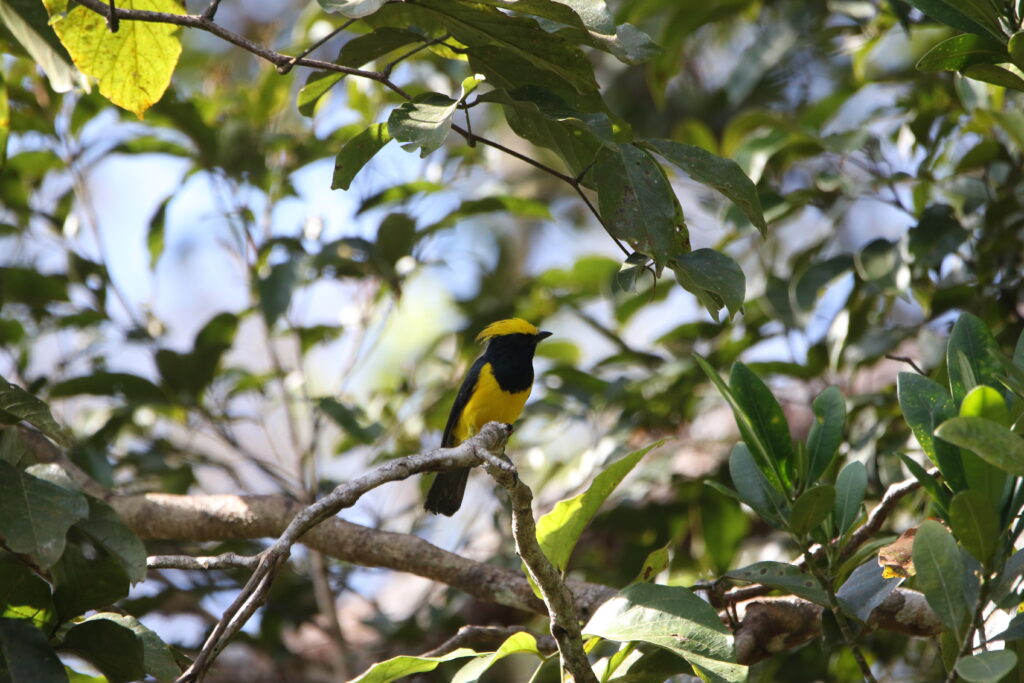
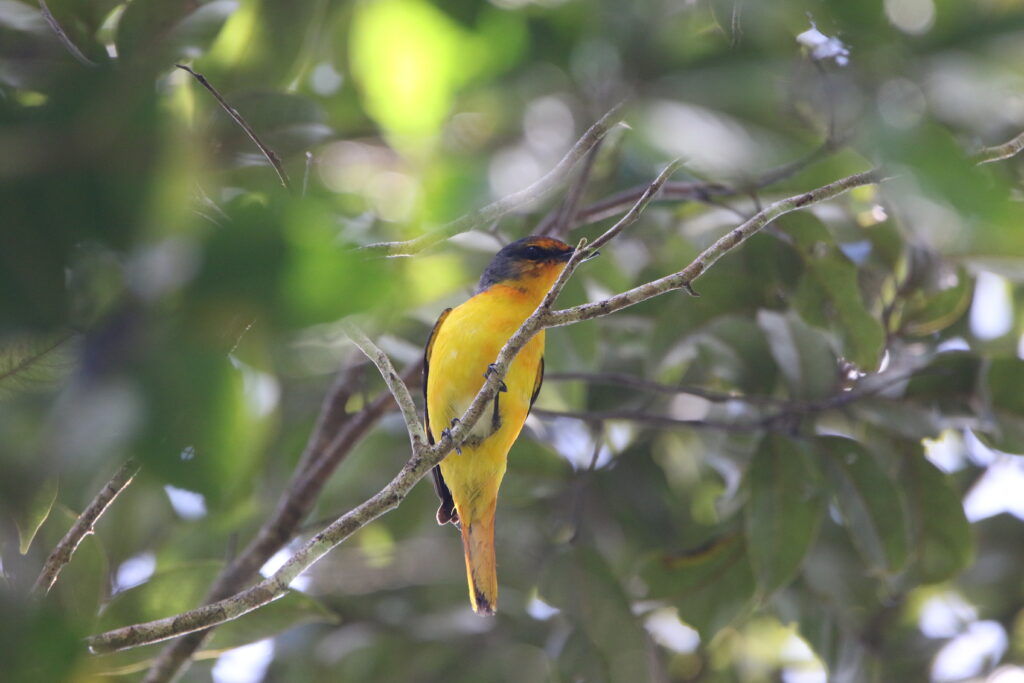
At the corner of the road, when the road turns left, you might spot Pygmy Cupwing (Pnoepyga pusilla) or Blue Whistling Thrush (Myophonus caeruleus). In terms of broadbills, this area is home to Long-tailed Broadbill (Psarisomus dalhousiae), which has nested here in the past. With a bit of luck, you might also spot Silver-breasted Broadbill (Serilophus lunatus).
Keep your ears open to hear Collared Owlet (Taenioptynx brodiei) and try to spot which tree it is perched on. Even during the day, it is sometimes possible to see it.


Jelai High Pines
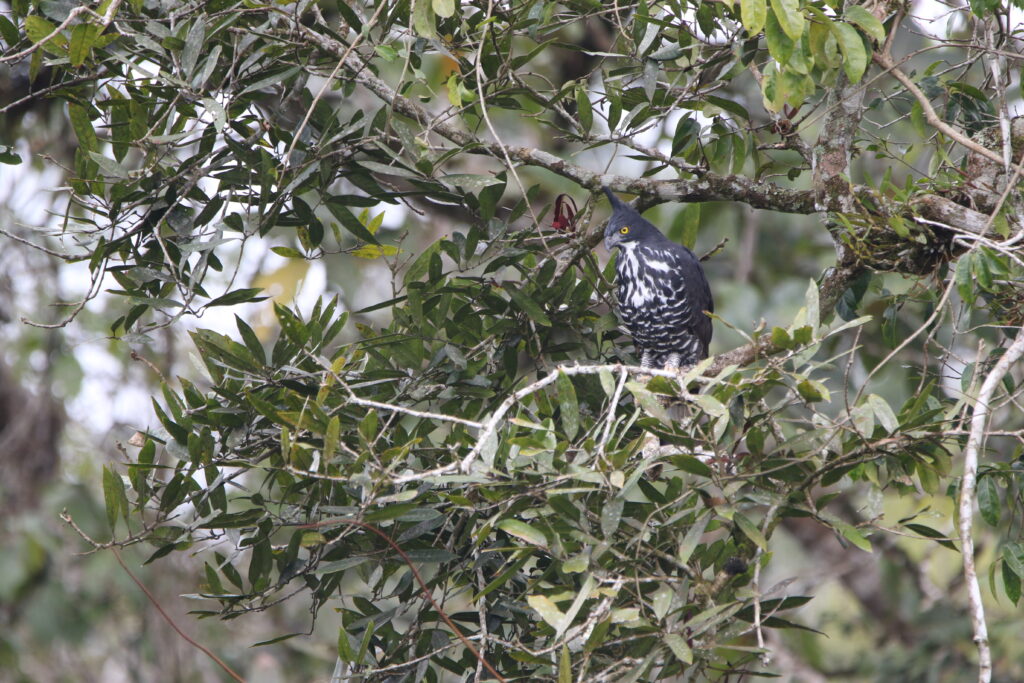
In the past, there used to be a hotel at the end of the road: Jelai Highland Resort. But now, it’s not the hotel that is interesting, rather the road leading to it. Right after leaving the roundabout at the top of Fraser’s Hill, you have a nice viewpoint over the surrounding mountains. This is where we have repeatedly seen raptors, including a perched Blyth’s Hawk-Eagle (Nisaetus alboniger).
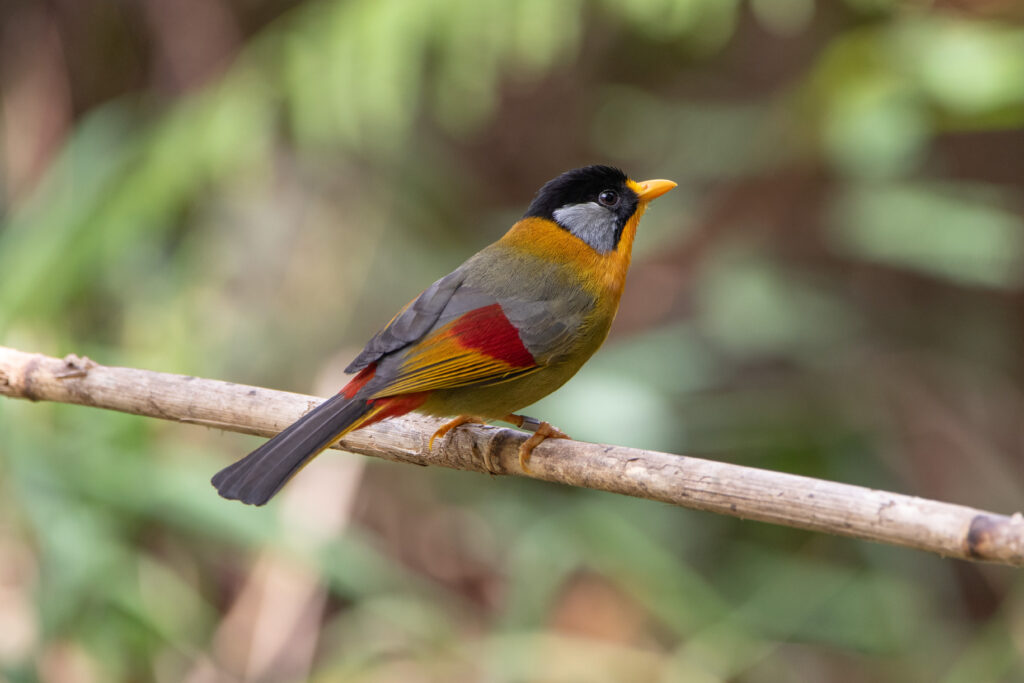
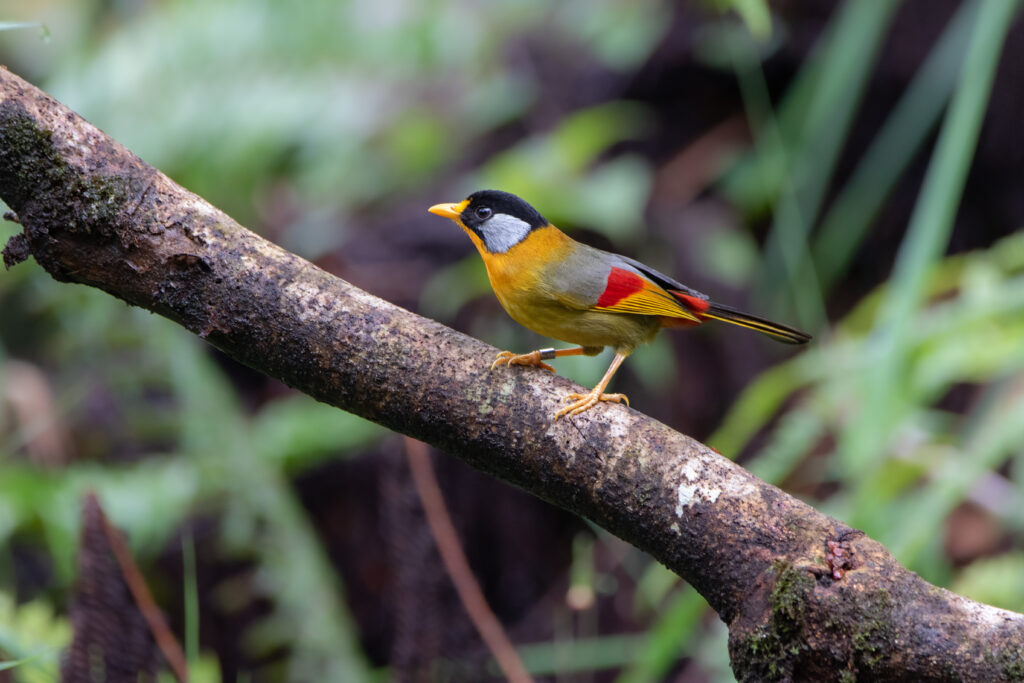
Continuing along this road, you reach a feeding station popular with Silver-eared Mesia (Leiothrix argentauris), once found throughout Fraser’s Hill but now almost exclusively seen here.
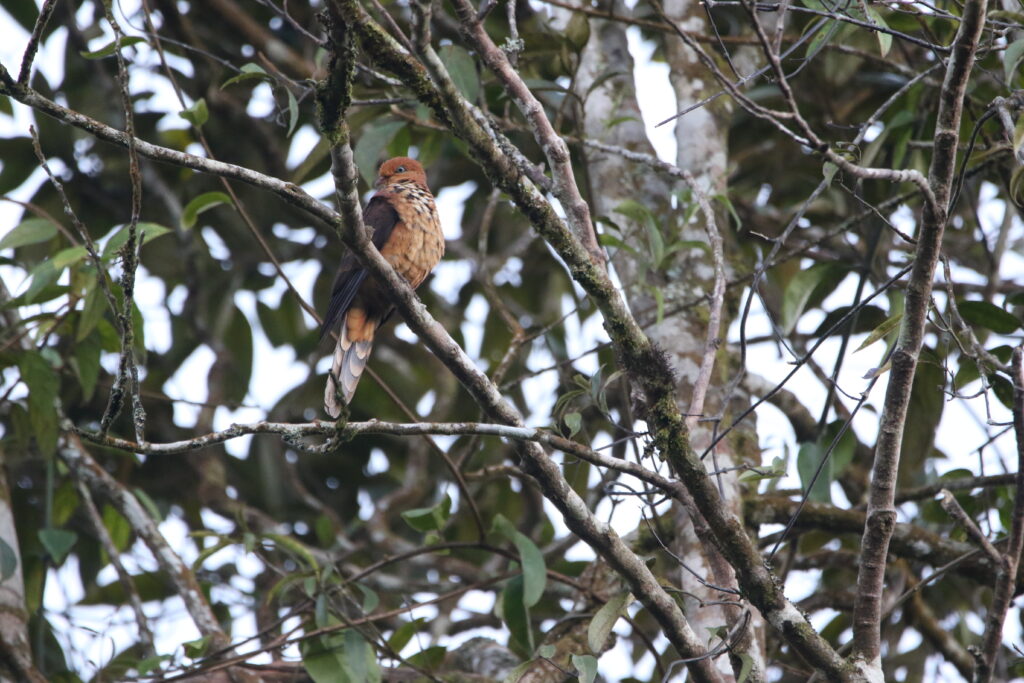
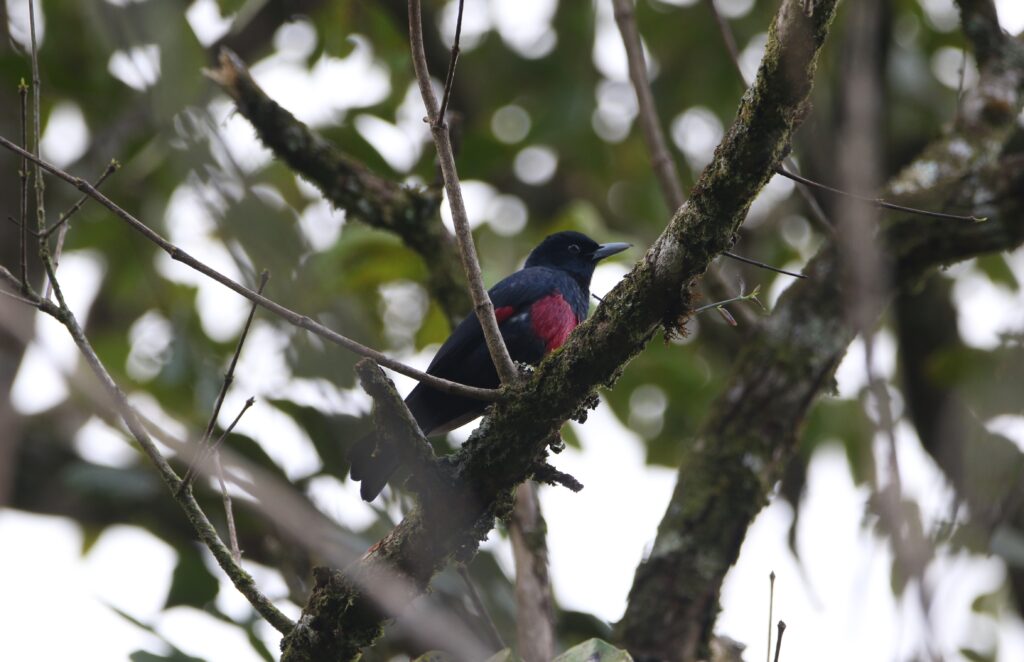
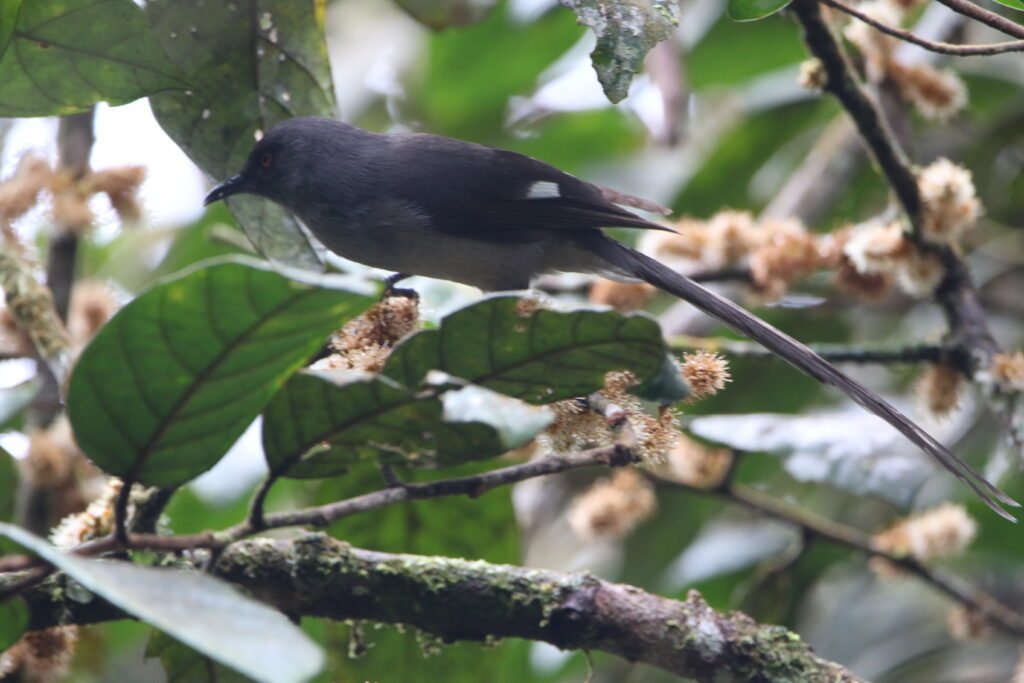
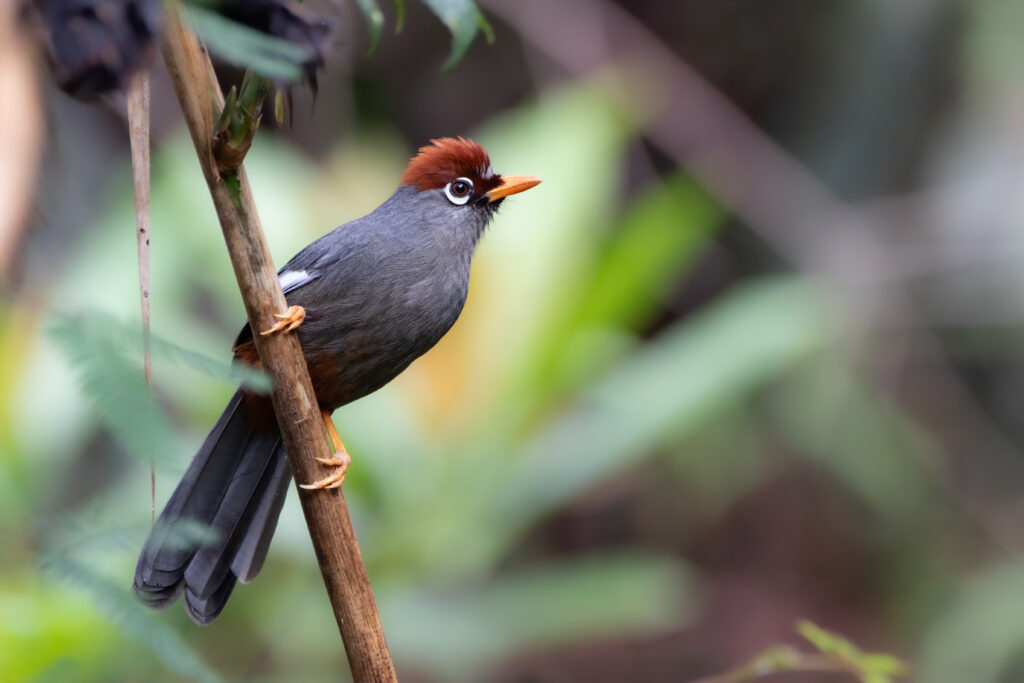
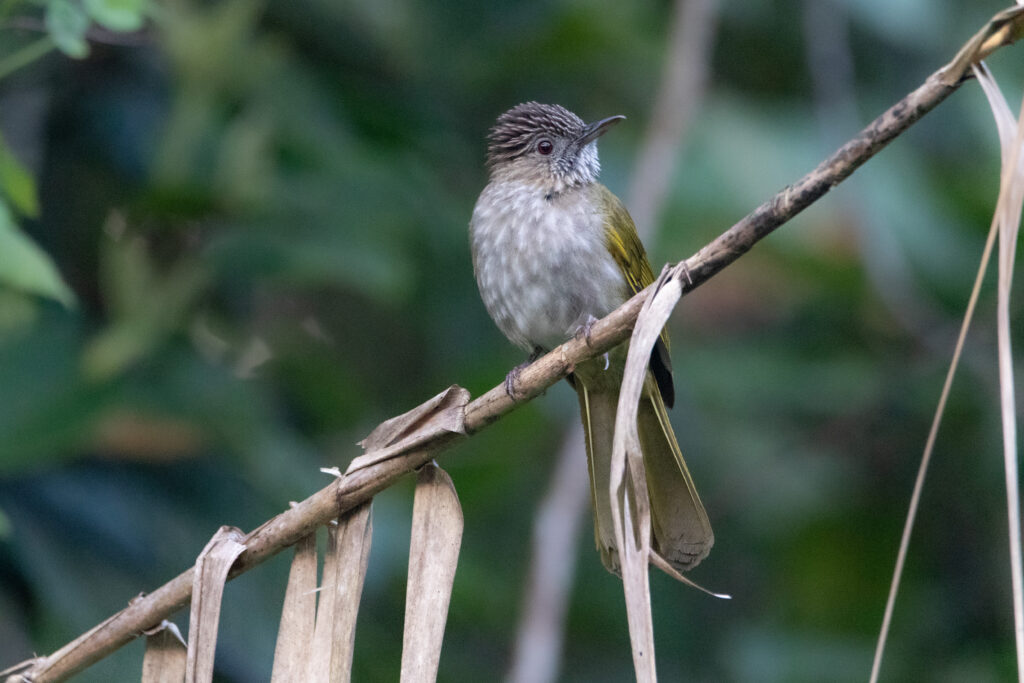
You can also see the three species of laughingthrushes: Chestnut-capped Laughingthrush (Pterorhinus mitratus), Long-tailed Sibia (Heterophasia picaoides), and the less common Malayan Laughingthrush (Trochalopteron peninsulae). Other birds in the area include Mountain Bulbul (Ixos mcclellandii), Black-and-crimson Oriole (Oriolus consanguineus), and Little Cuckoo-Dove (Macropygia ruficeps).
Jalan Mager
This short road is interesting for the small trail that runs alongside a stream.
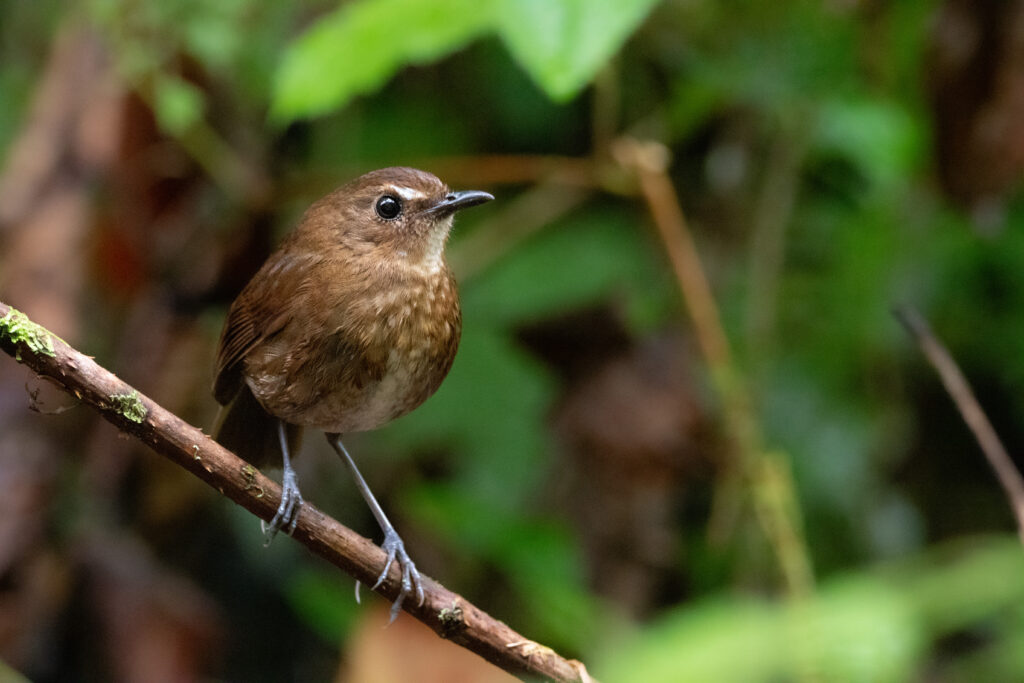
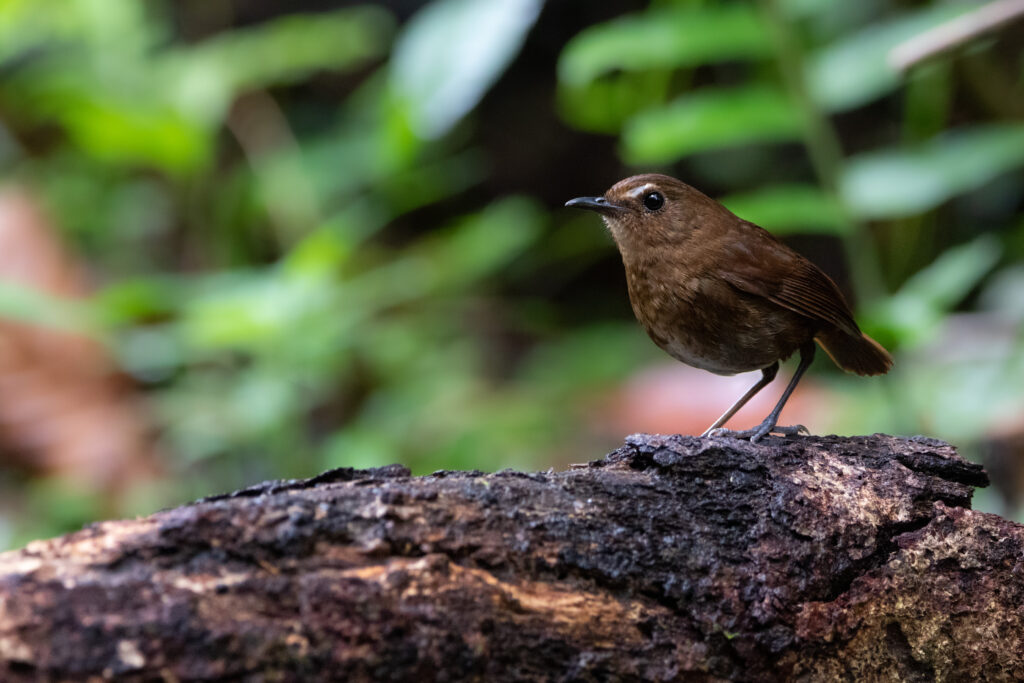
Here you may spot Slaty-backed Forktail (Enicurus schistaceus) or Lesser Shortwing (Brachypteryx leucophris). You can also try looking for Blue Nuthatch (Sitta azurea), discreetly climbing trees in search of insects.
Jalan Richmond
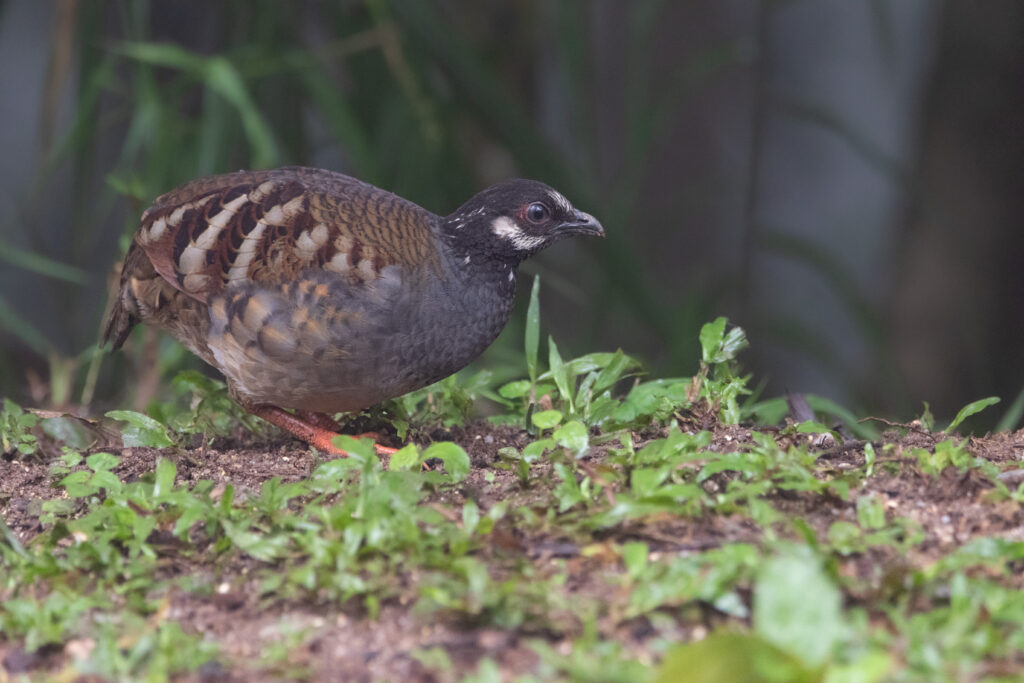
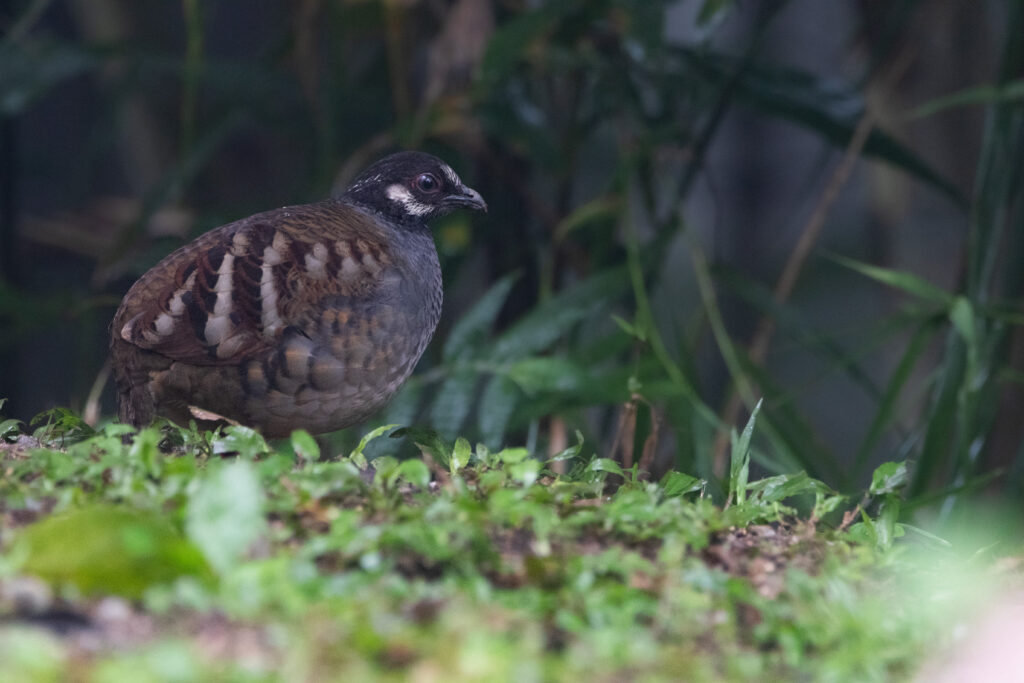
At the top of Jalan Richmond, you reach the area most frequented by Malayan Partridge (Arborophila campbelli). Many photographers regularly place corn here, which often attracts the partridges.
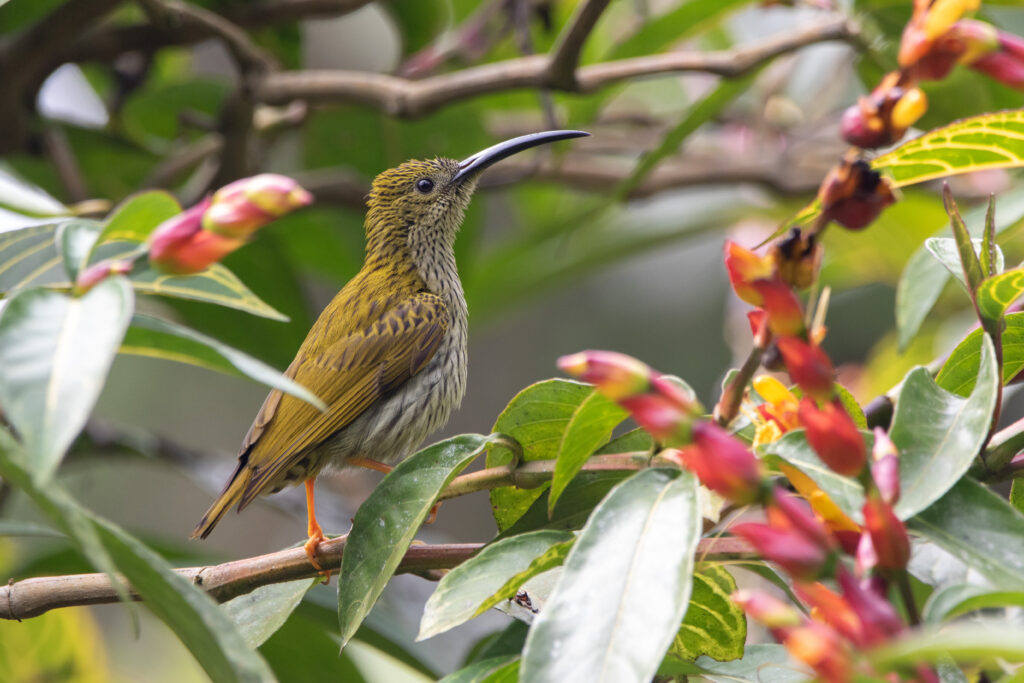
These endemic partridges can also be seen in other parts of Fraser’s Hill (and are sometimes more rewarding), but this is where your chances are highest. Aside from this bird, we also saw Common Green Magpie (Cissa chinensis), whose data no longer appear on eBird due to illegal capture, and several Streaked Spiderhunters (Arachnothera magna). This area is also home to Rhinoceros Hornbill (Buceros rhinoceros).
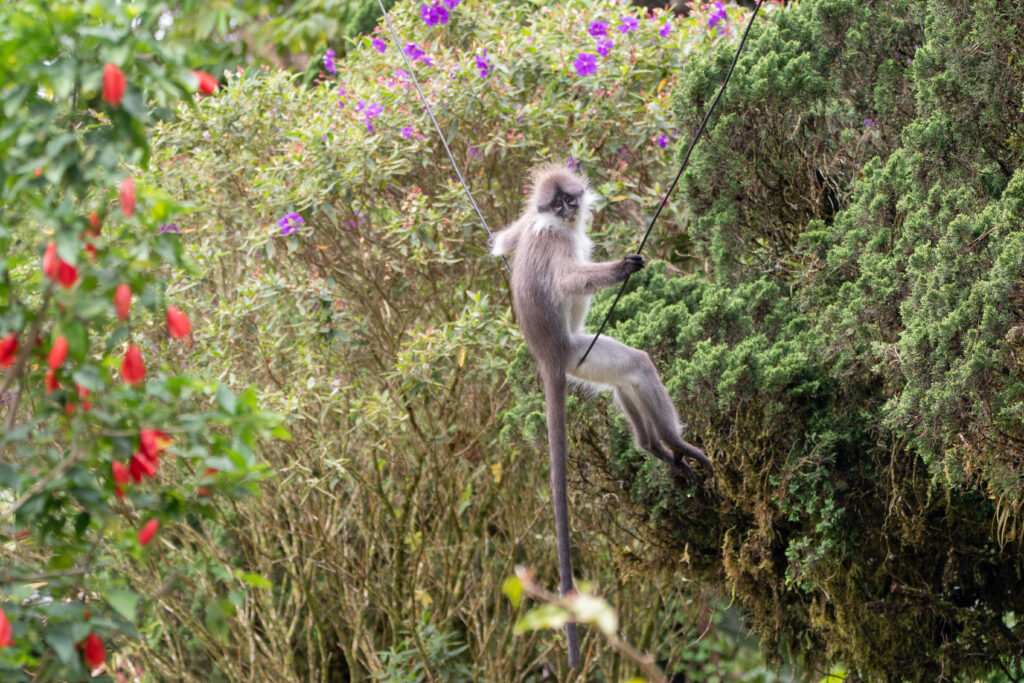
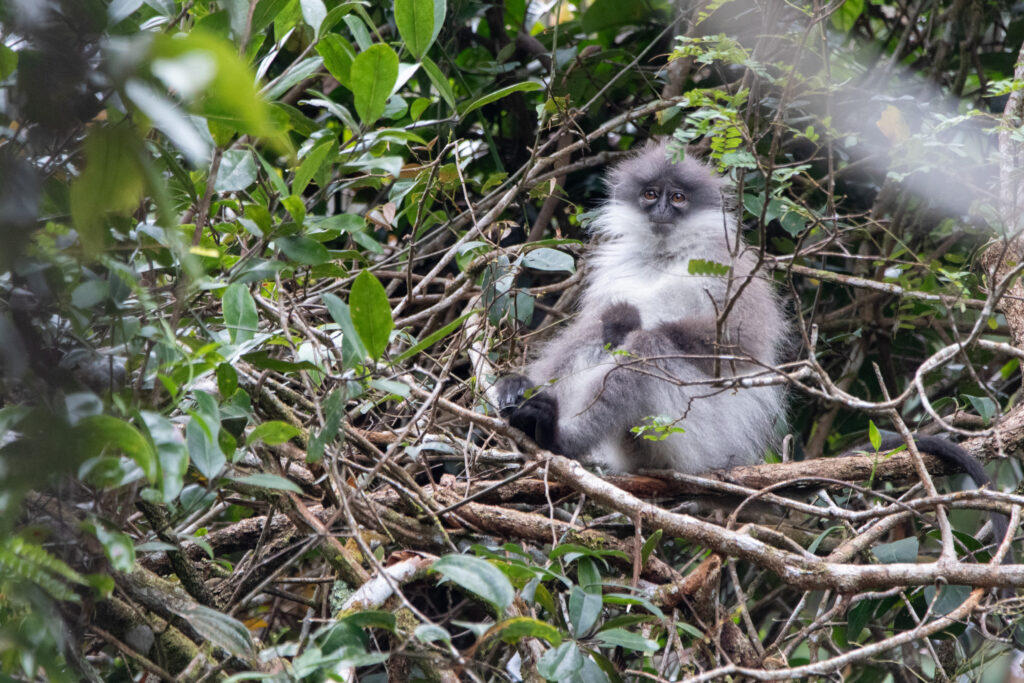
Regarding mammals, we observed numerous Silvered Langurs here, including one swinging on a power line.
City-center & Hemmant trail
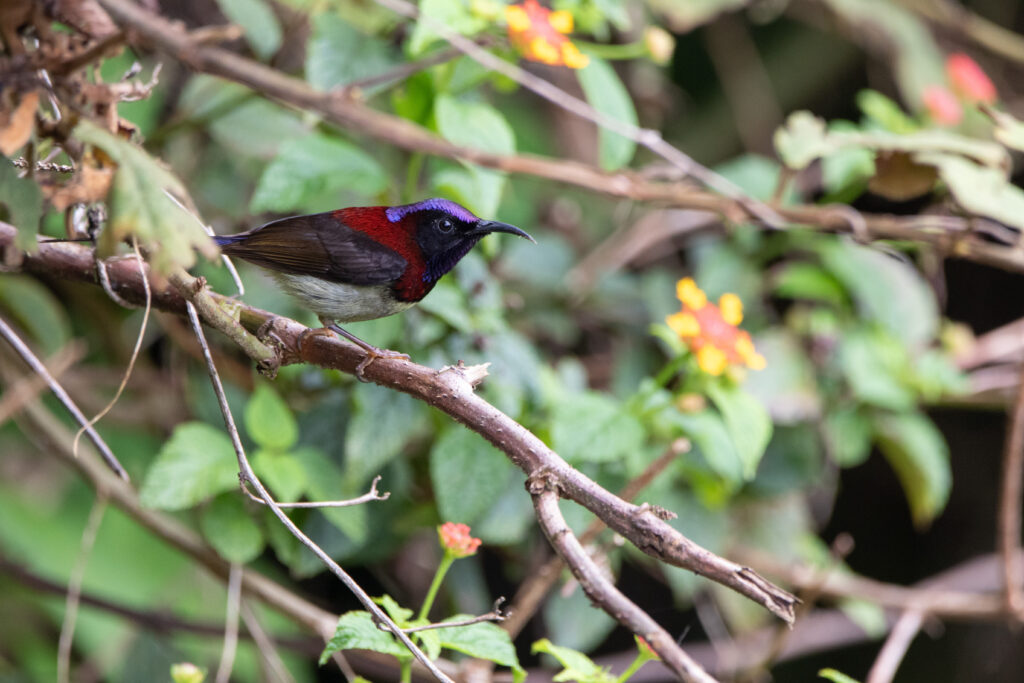
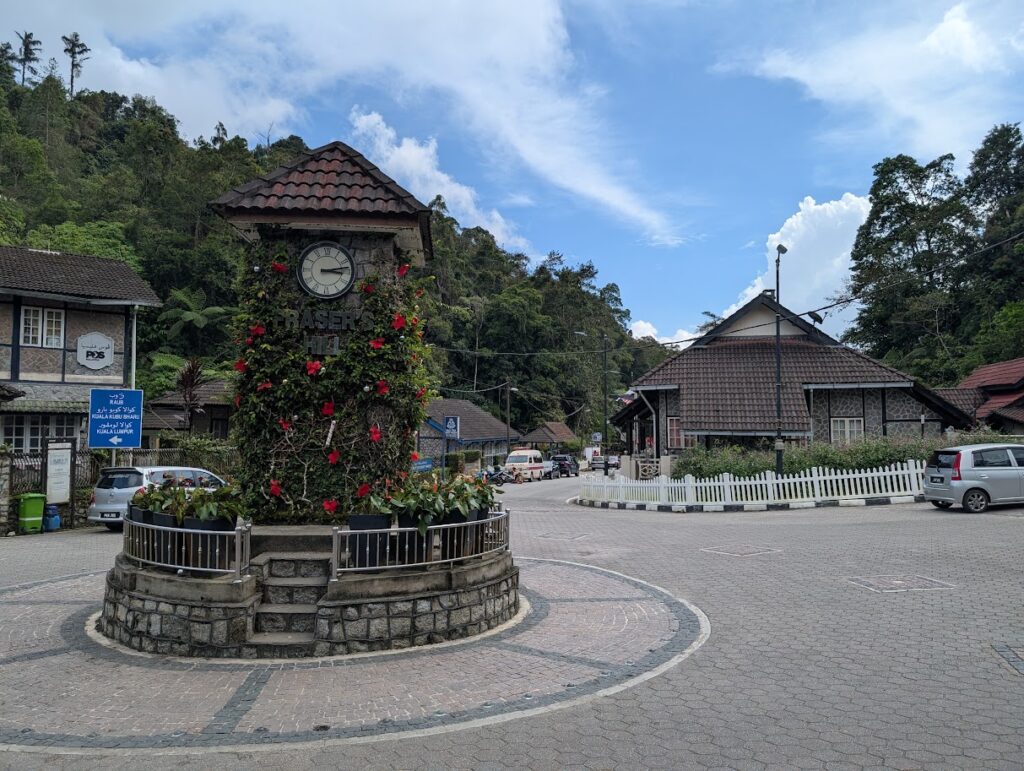
The town center near the clock tower is also a nice spot for a short walk. Here we saw Black-throated Sunbird (Aethopyga saturata) and Fire-breasted Flowerpecker (Dicaeum ignipectus). If you continue up the road, you will reach Hemmant Trail, which provided opportunities to see many flycatchers.
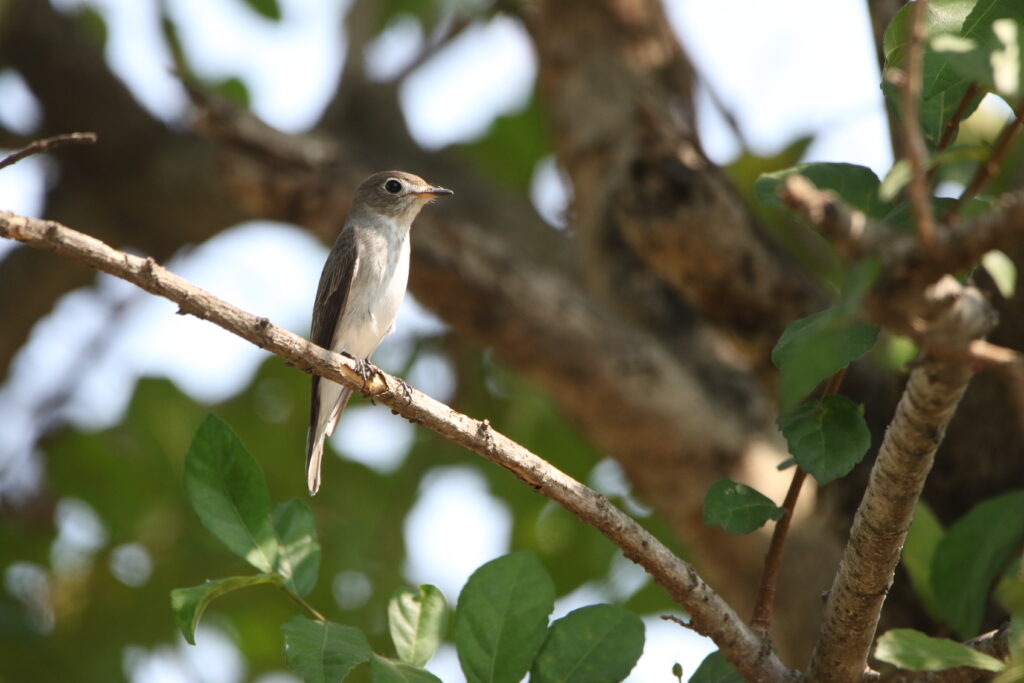
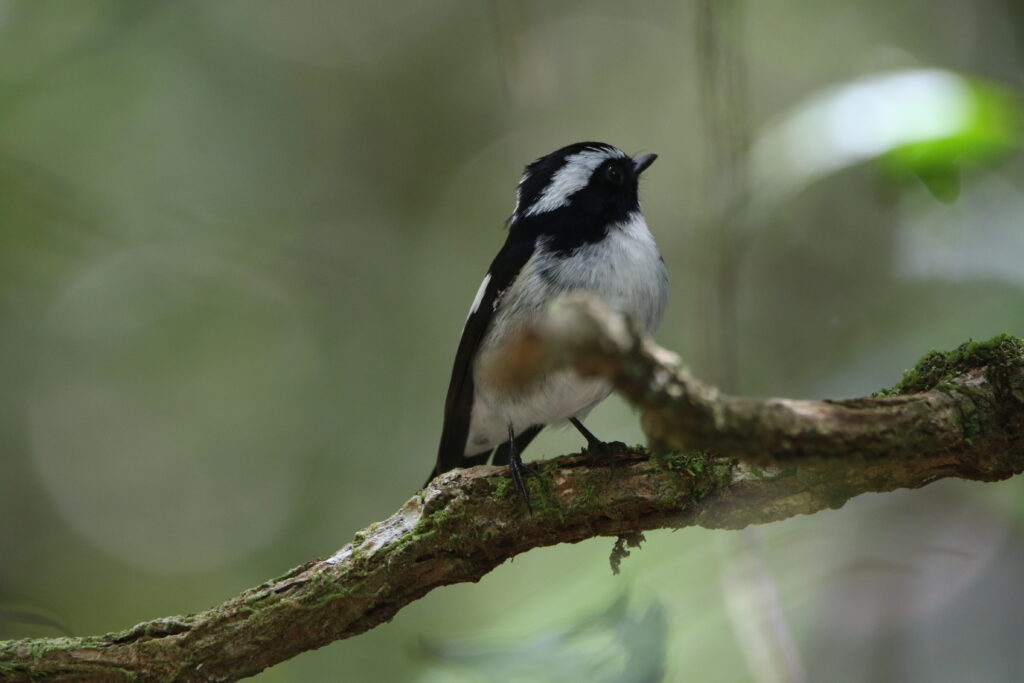
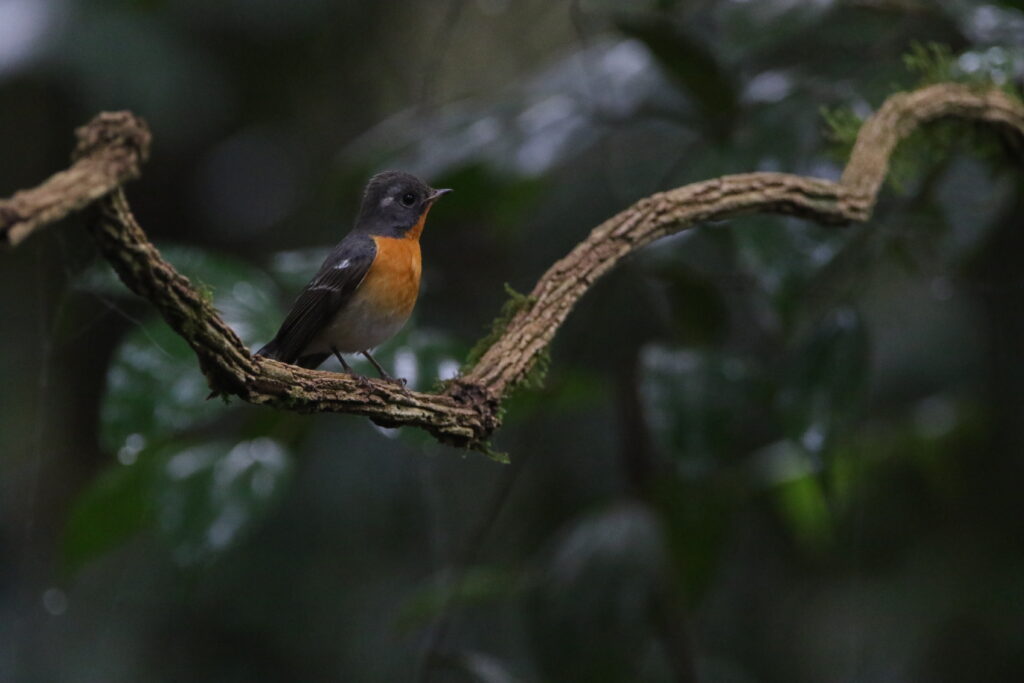
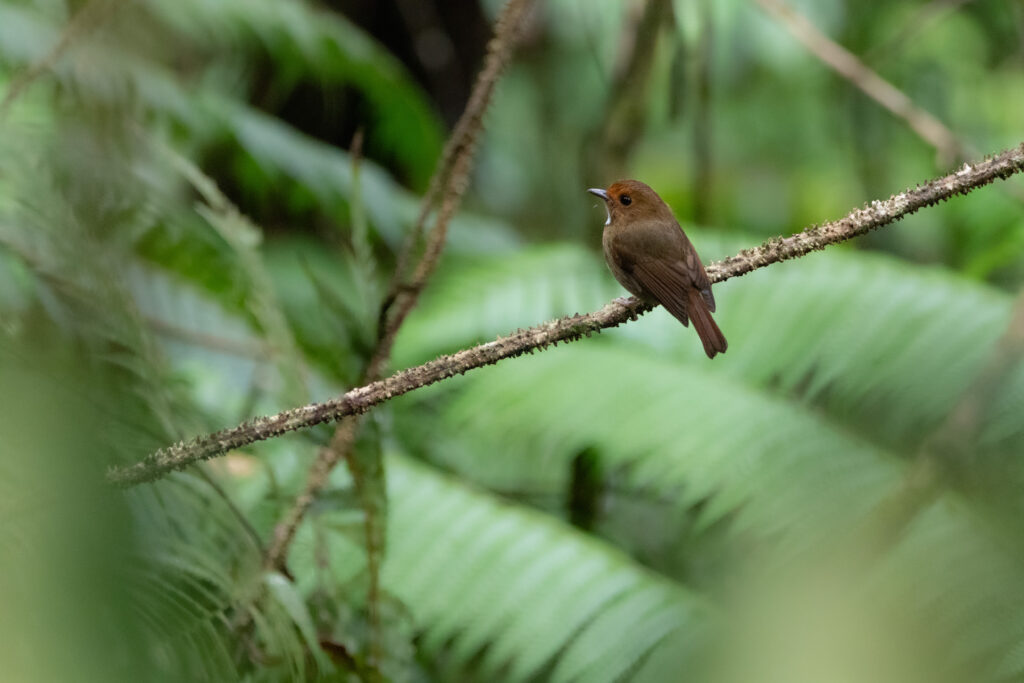
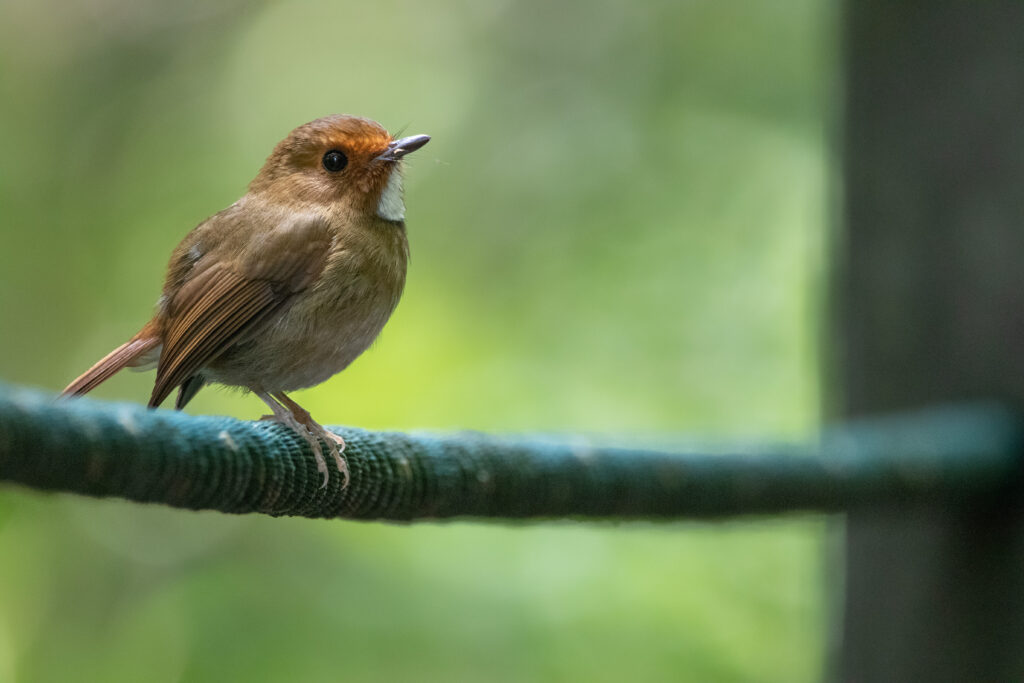
Here are the main species you can see here and across the hill: White-tailed Robin (Myiomela leucura), Mugimaki Flycatcher (Ficedula mugimaki), Rufous-browed Flycatcher (Anthipes solitaris), Verditer Flycatcher (Eumyias thalassinus), Large Niltava (Niltava grandis), Asian Brown Flycatcher (Muscicapa dauurica), and Little Pied Flycatcher (Ficedula westermanni).

The Gap and Fraser’s Hill Entry/Exit Road
The Gap is the entry point to Fraser’s Hill, located at the bottom of the valley. It is a popular spot for some birders, as well as the entry and exit roads. Along these roads, multiple stops on the roadside are necessary. With the varying altitudes, you can see a wide variety of birds. However, personally, I do not enjoy these areas for several reasons. First, it is very noisy due to the many cars passing by. Second, it is quite dangerous because you are on the edge of the road and cars often drive too fast. For these reasons, I do not go there and cannot provide a detailed description.
How to get to Fraser’s Hill?
Unfortunately, reaching Fraser’s Hill by public transport is very difficult, if not impossible. You can hire a taxi, but you will need to arrange for it to pick you up for the return journey, as no taxis are available on-site. The downside of using a taxi is that moving between the different birding spots will be difficult. While possible, it will require a lot of walking.
This is why, if you have a driving license, renting a car can be very convenient. If you have already done so in Kuala Lumpur, even better. Otherwise, you can take a bus from Kuala Lumpur to the town of Raub and rent a car there.
Where to stay in Fraser’s Hill?
There are many accommodations in Fraser’s Hill. The first option (and the most economical) is to stay near the clock tower in places like Puncak Inn (recently renovated) or Shahzan Inn.
You can also stay a bit higher, near Bishop Trail, in accommodations such as Fraser’s Silverpark Resort or The Hill.
Another option, perhaps more expensive but with a superb view, is to stay near Telekom Loop. Excellent lodgings such as MCM Nature Discovery Villa or Green Acre’s are available.
Pingback: Birding at Bukit Tinggi - Birdalia