


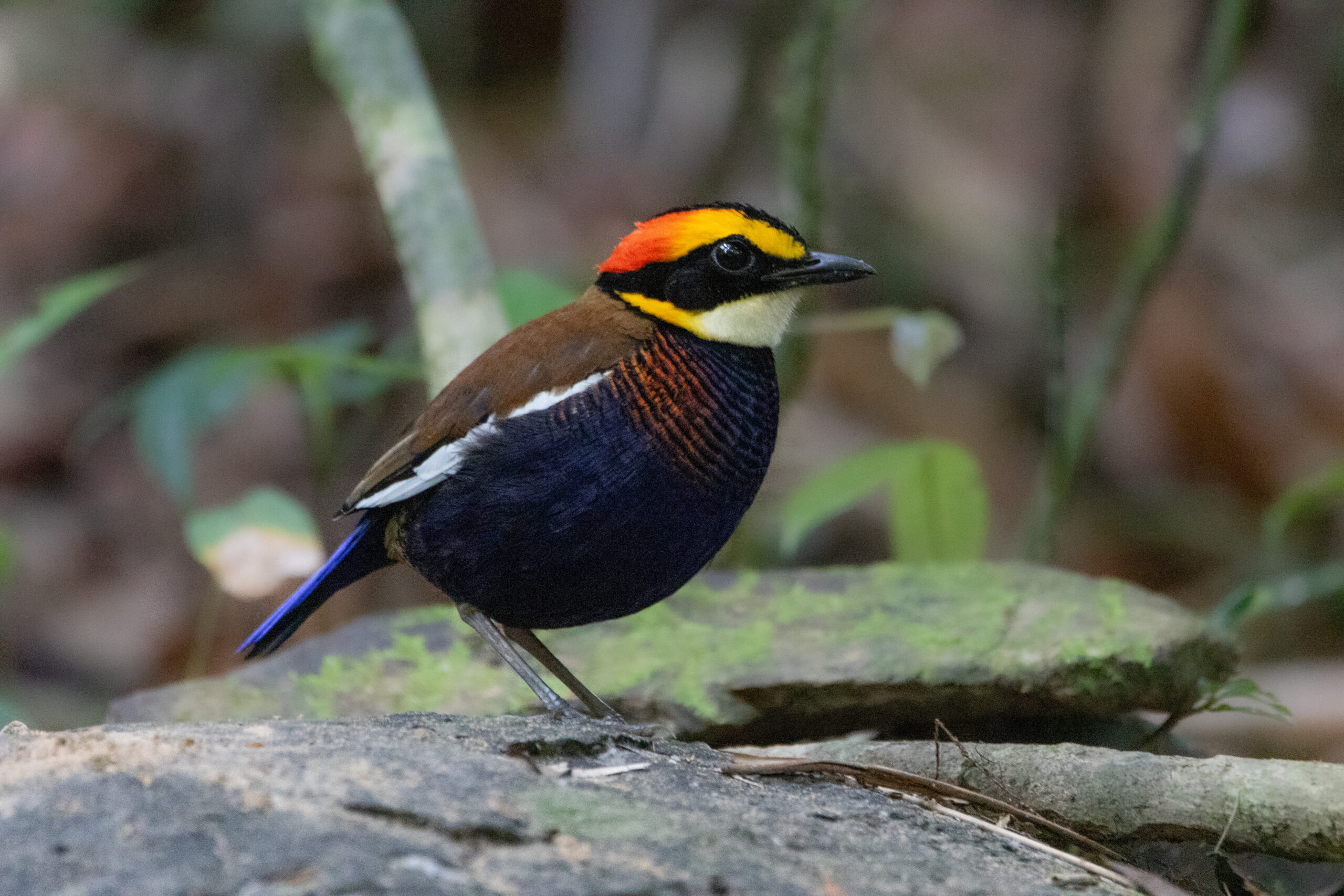
Birding in Sri Phang Nga
Sri Phang Nga National Park (sometimes written Si Phang Nga) is located in Phang Nga Province. Only a very small part of the park is accessible to the public, with the majority dedicated to the protection and conservation of local species. The accessible area is nevertheless extremely interesting in terms of birdlife.
Sri Phang Nga is renowned for one bird species that is said to be “easy” to see: the Malayan Banded Pitta (Hydrornis irena). Beyond this species, the park is full of different birds that can be observed along the main road as well as on the trails. Sri Phang Nga combines well with Ao Phang Nga National Park or with Krabi and its mangroves.
Where to find birds in Sri Phang Nga?
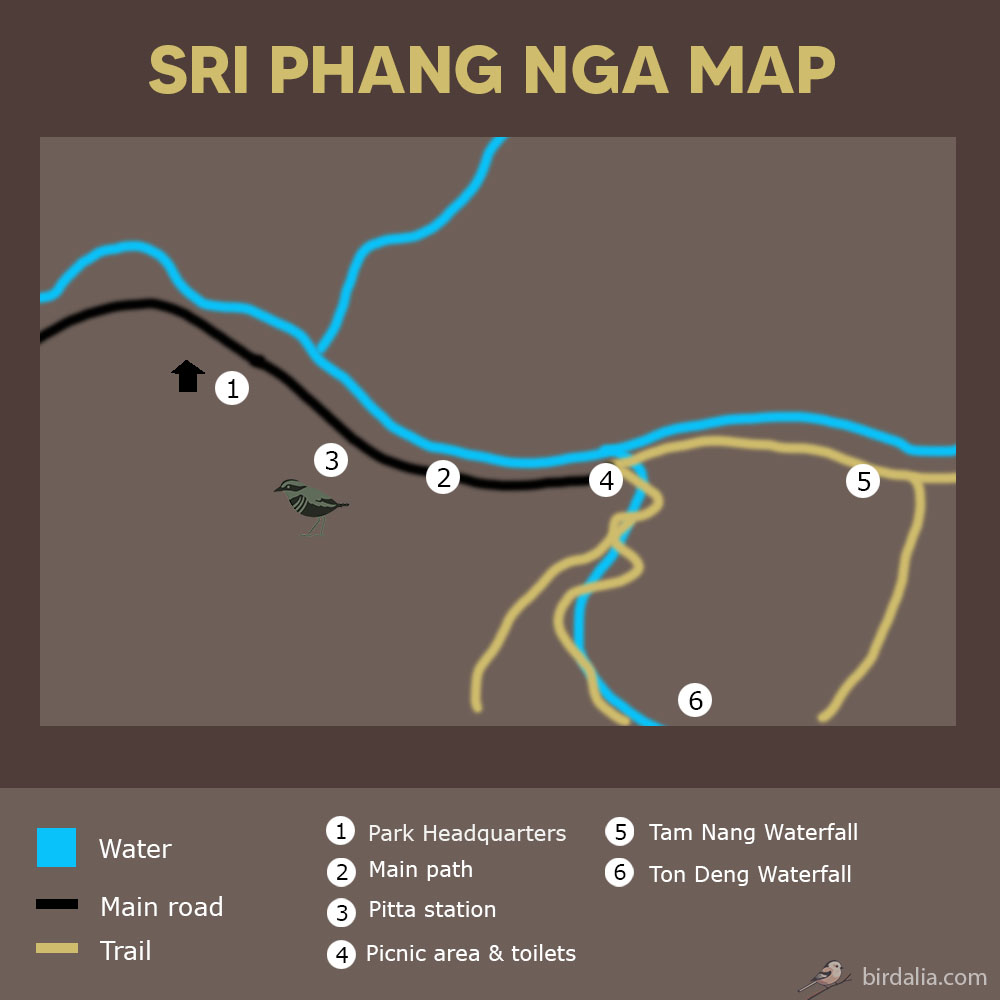
Before starting, here is a map of the accessible trails in the national park:
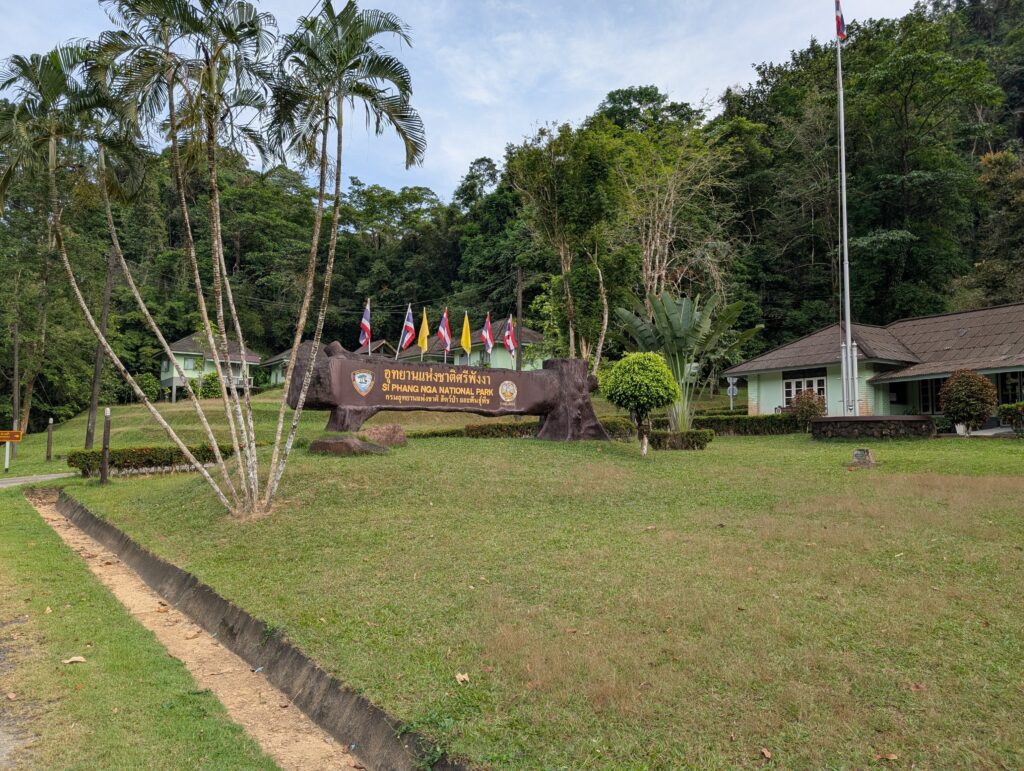
Around the park headquarters (1)
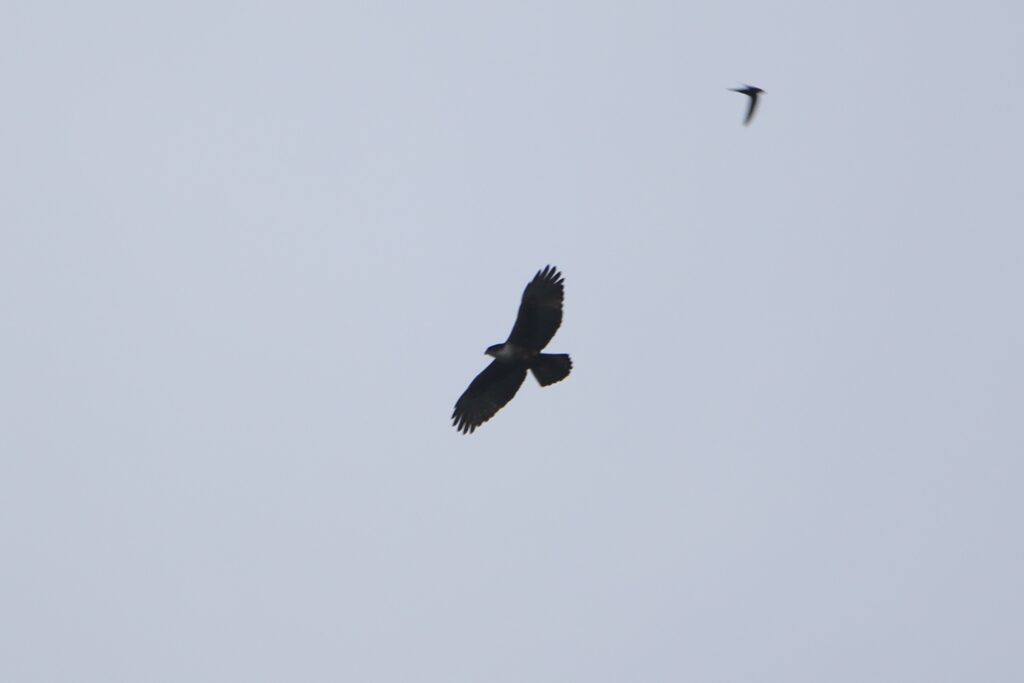
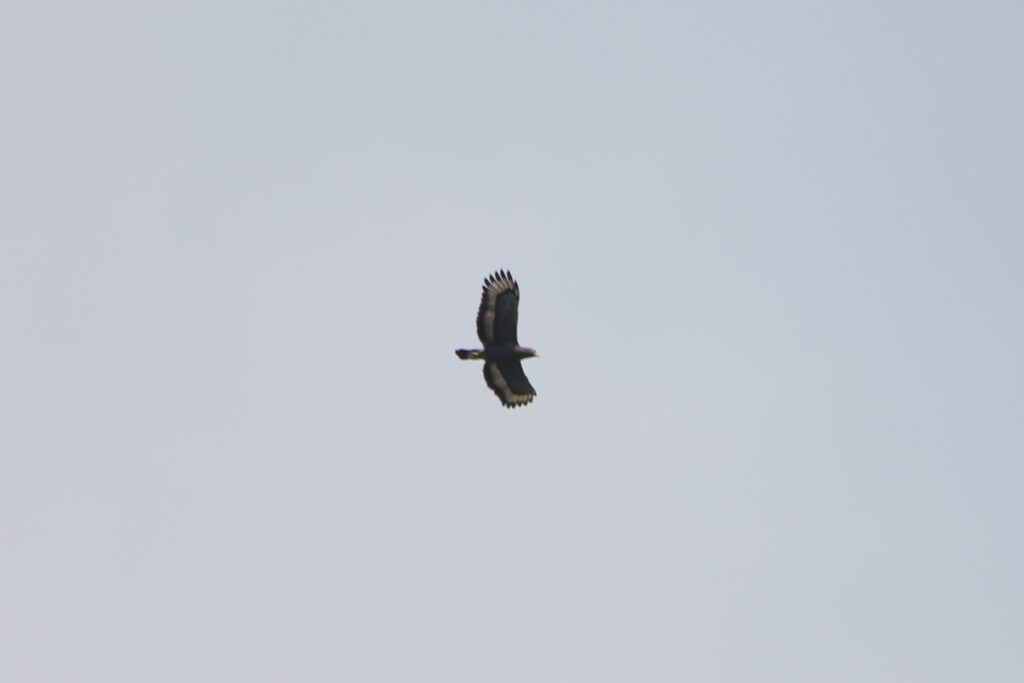
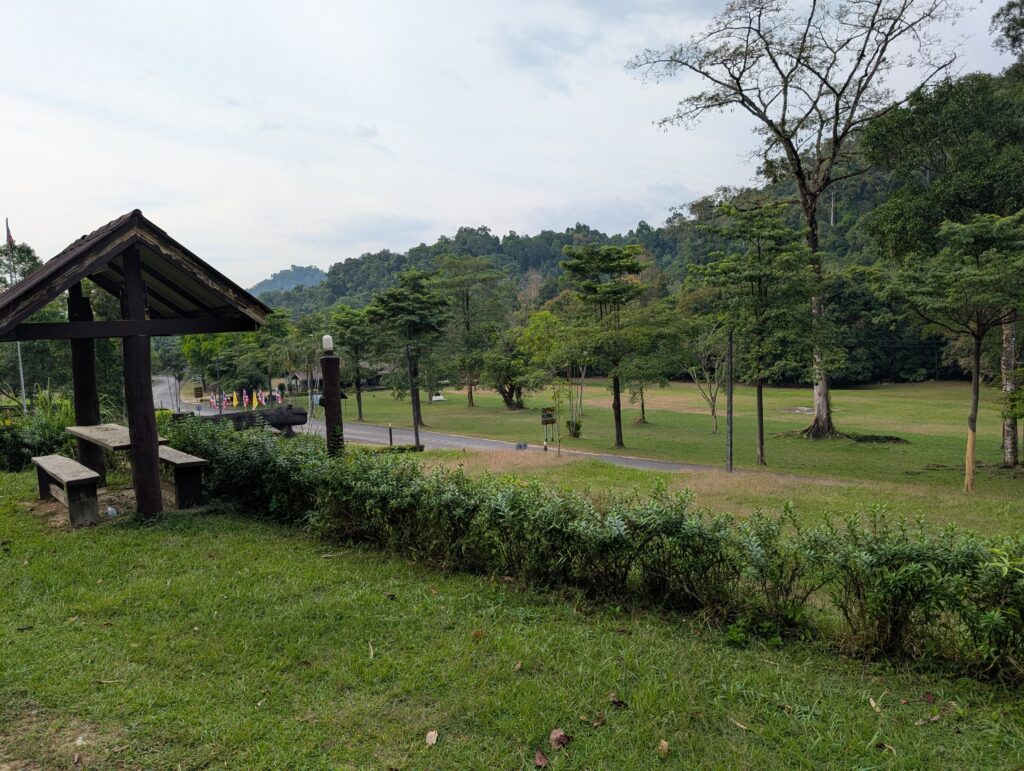
This is an open meadow, surrounded by forest and tall trees, where you can observe species such as the Great Hornbill (Buceros bicornis) or even raptors like the Rufous-bellied Eagle (Lophotriorchis kienerii) and the Crested Honey Buzzard (Pernis ptilorhynchus).

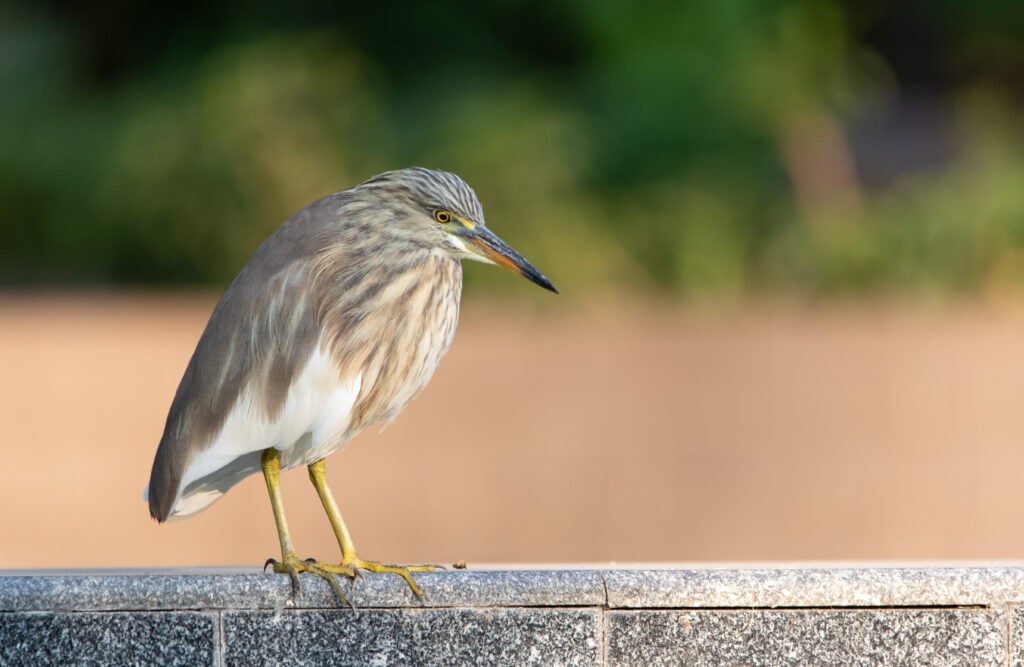
At sunset, Chinese Pond Heron (Ardeola bacchus) and Intermediate Egret (Ardea intermedia) can be seen.
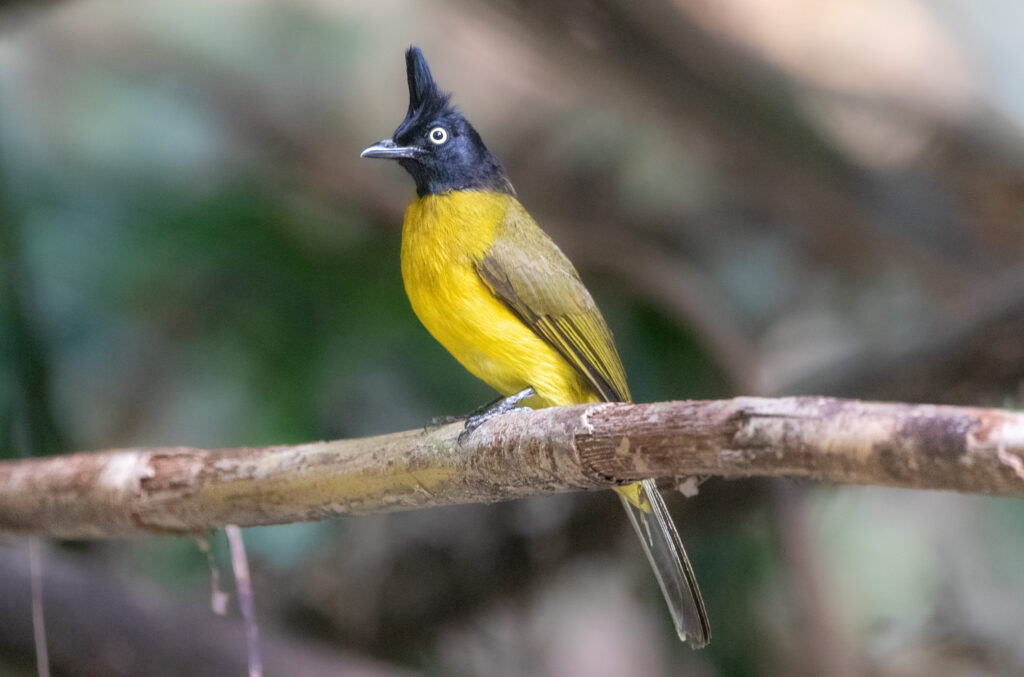
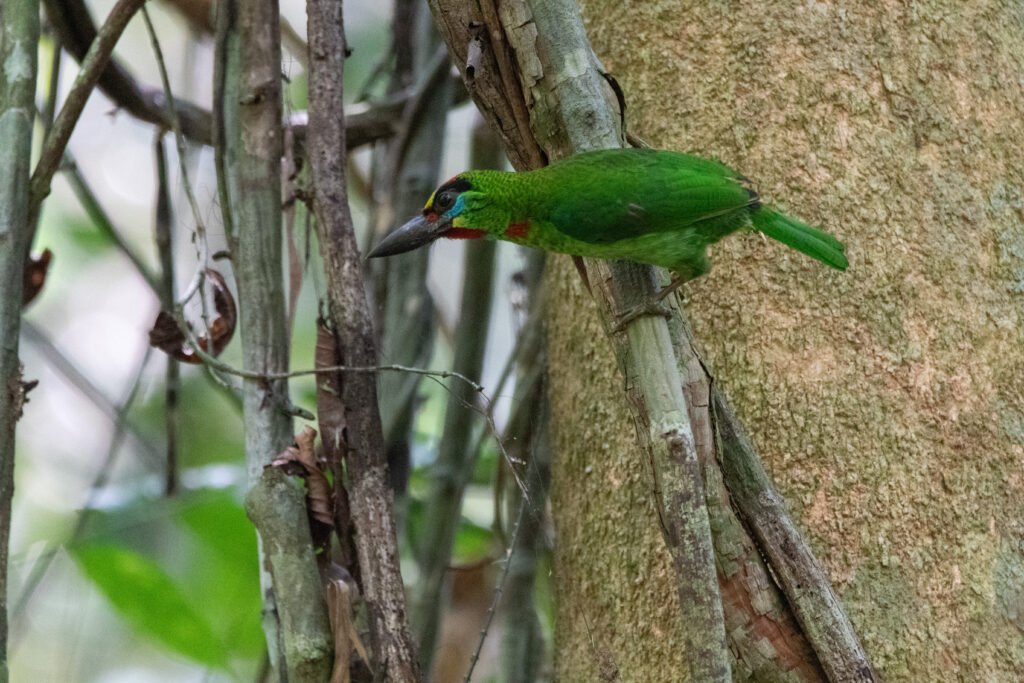
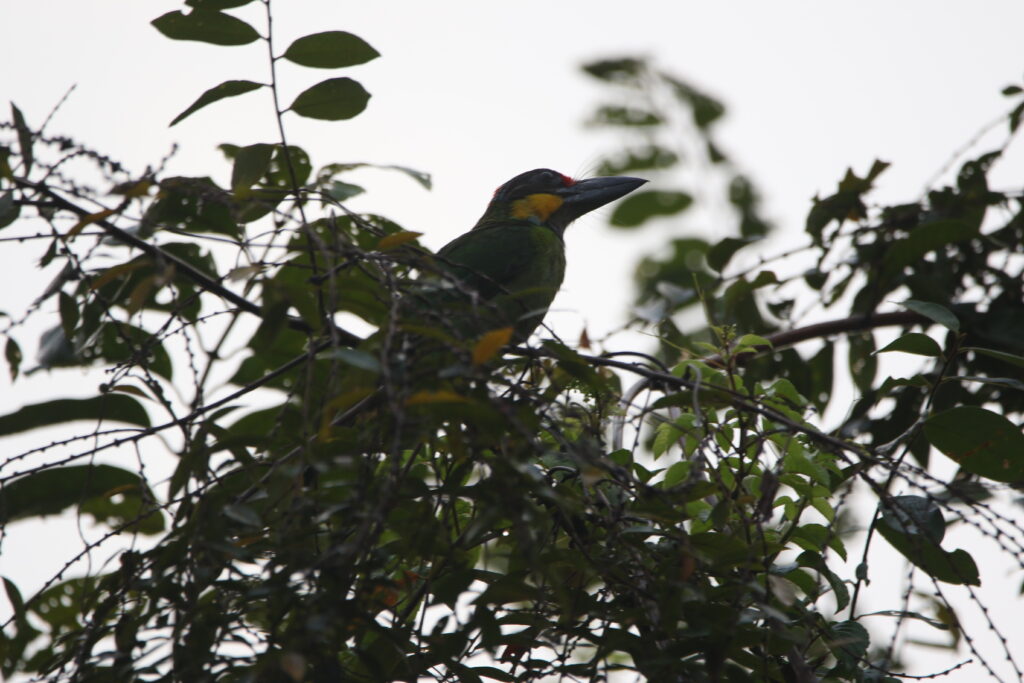
Early in the morning, fruit trees may also attract many passerines, including various bulbul species: Black-headed Bulbul (Brachypodius melanocephalos), Spectacled Bulbul (Ixodia erythropthalmos), Cream-vented Bulbul (Pycnonotus simplex), Asian Red-eyed Bulbul (Pycnonotus brunneus), Black-crested Bulbul (Rubigula flaviventris), and Streaked Bulbul (Ixos malaccensis). The luckiest birders may even spot the Grey-bellied Bulbul (Ixodia cyaniventris) and Scaly-breasted Bulbul (Ixodia squamata). Finally, it is also possible to see the Golden-whiskered Barbet (Psilopogon chrysopogon) and the Red-throated Barbet (Psilopogon mystacophanos).


Feeding station and main trail
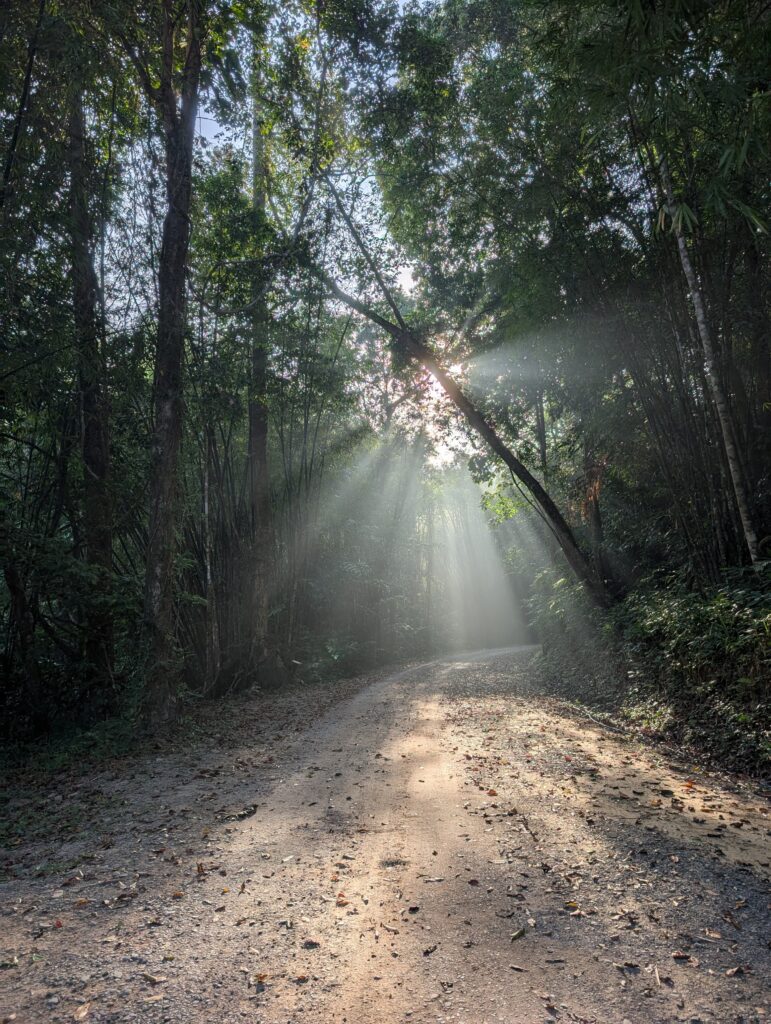
Along the main trail (2), which connects the park entrance (1) to the picnic area (4), you will find a feeding station (3) dedicated to observing the beautiful Malayan Banded Pitta (Hydrornis irena). Early in the morning, you can visit this small hide in the hope of seeing the bird. It is not necessarily required to provide food since (unfortunately) the birds are already accustomed to coming here to look for worms. Once the sun becomes too strong, it is much more difficult to observe this pitta.
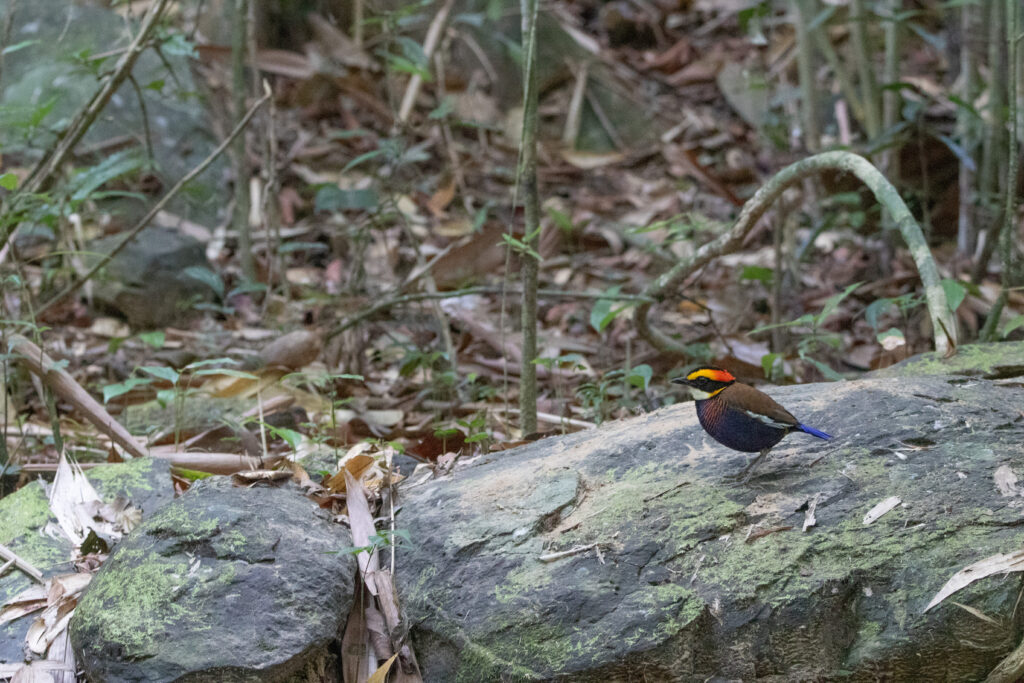

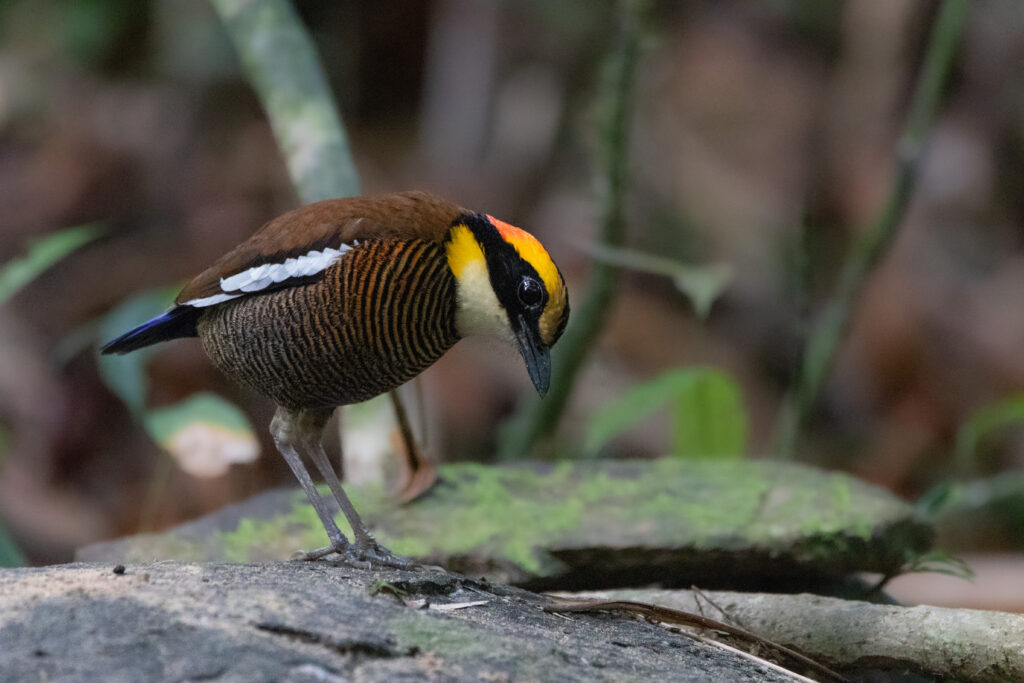
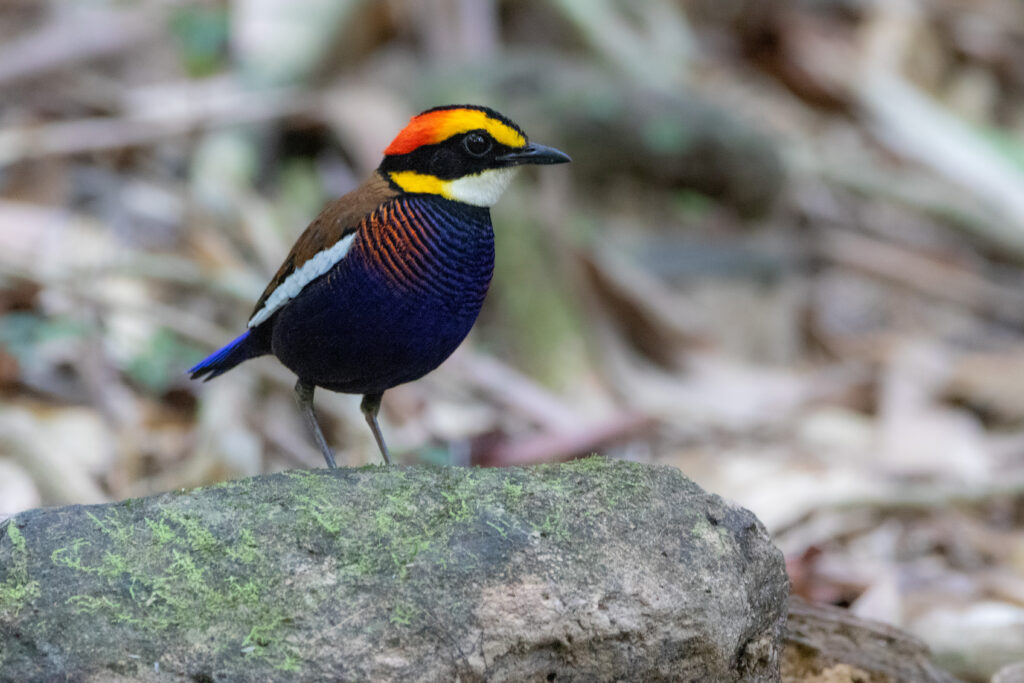

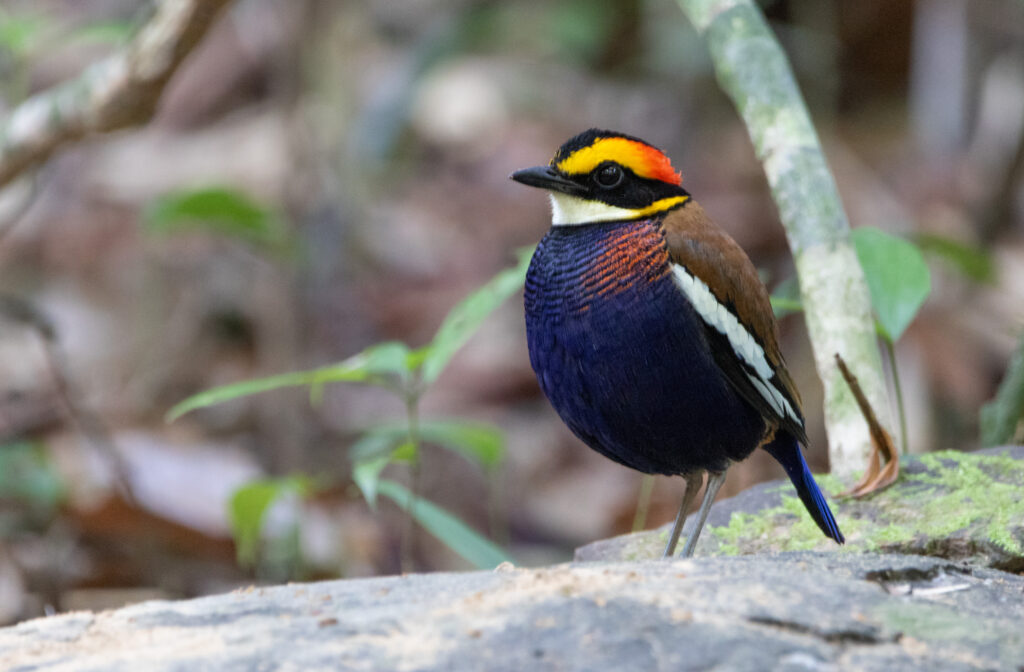
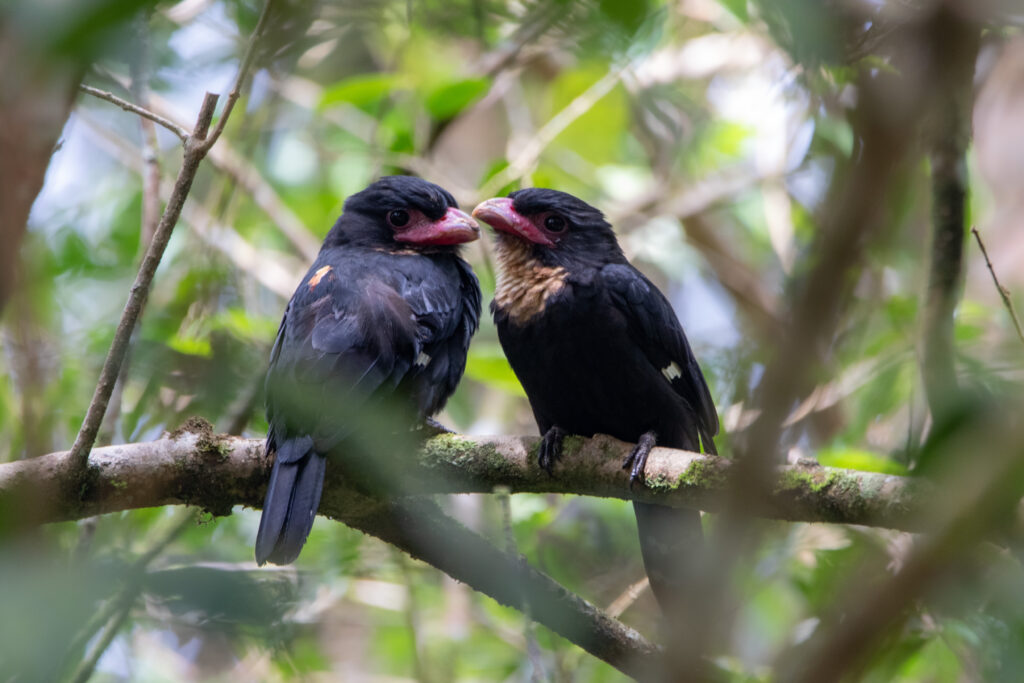
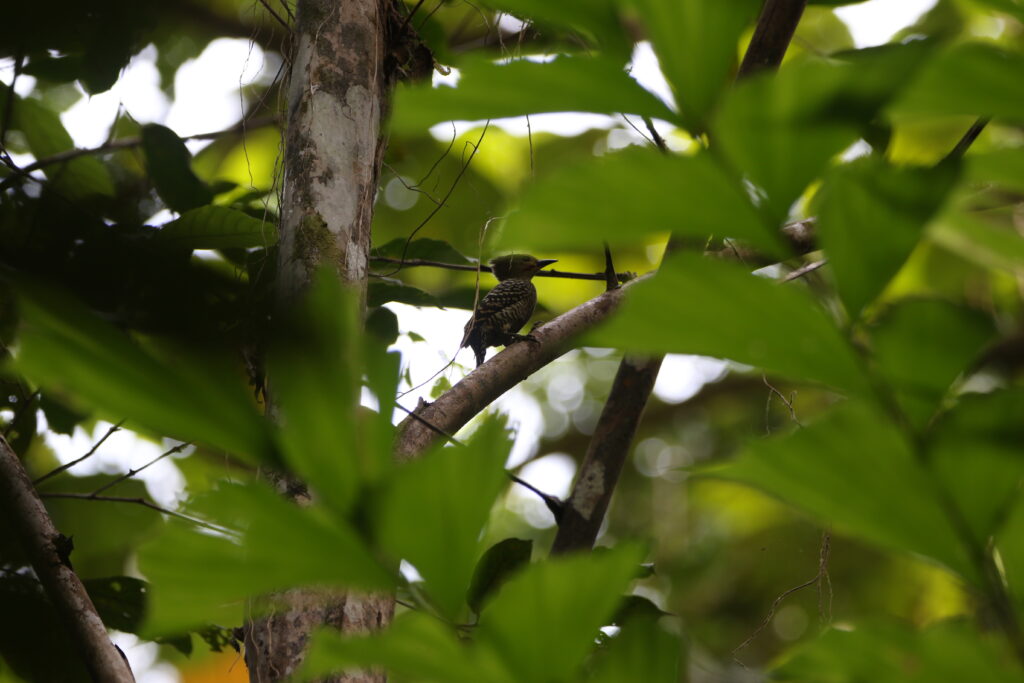
After seeing the pitta, you can continue along the main trail and try to spot the Red-bearded Bee-eater (Nyctyornis amictus), Square-tailed Drongo-Cuckoo (Surniculus lugubris), Banded Woodpecker (Chrysophlegma miniaceum), or Dusky Broadbill (Corydon sumatranus).
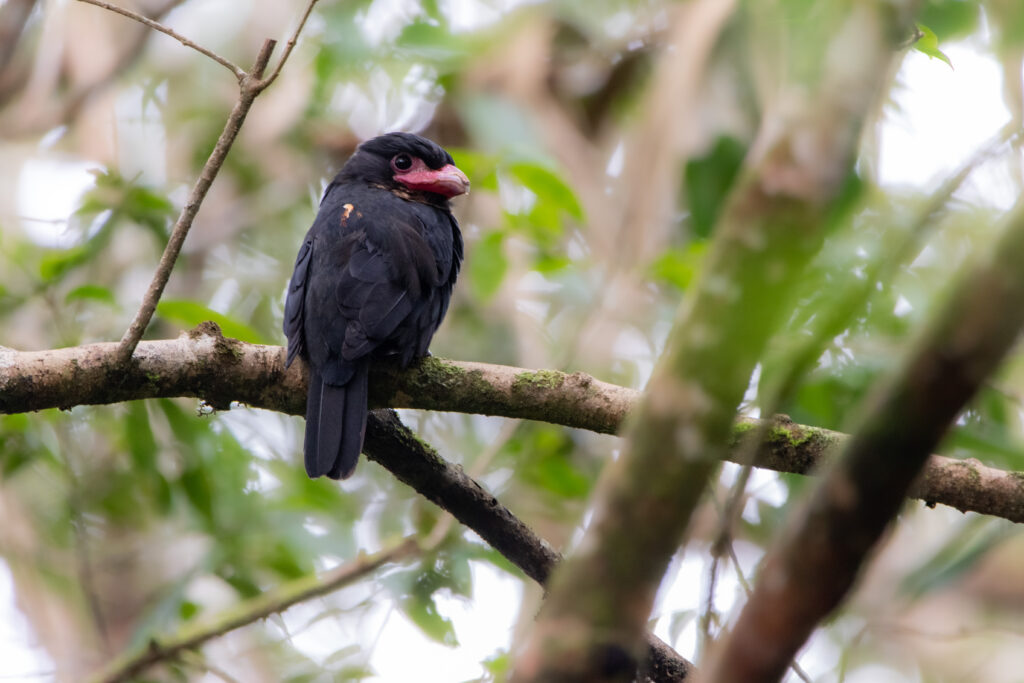
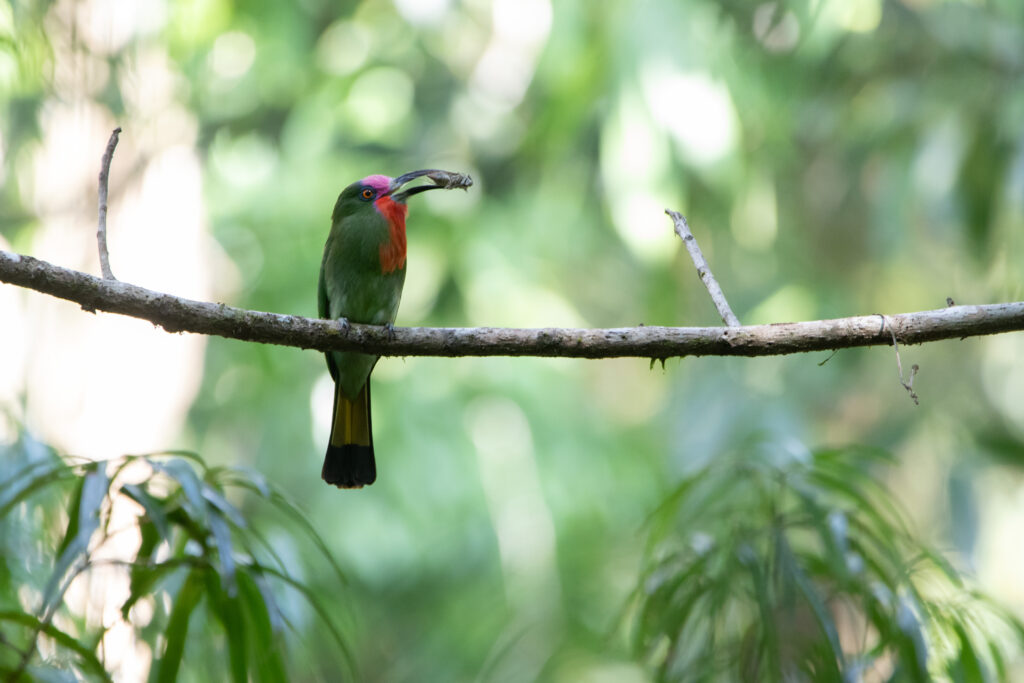

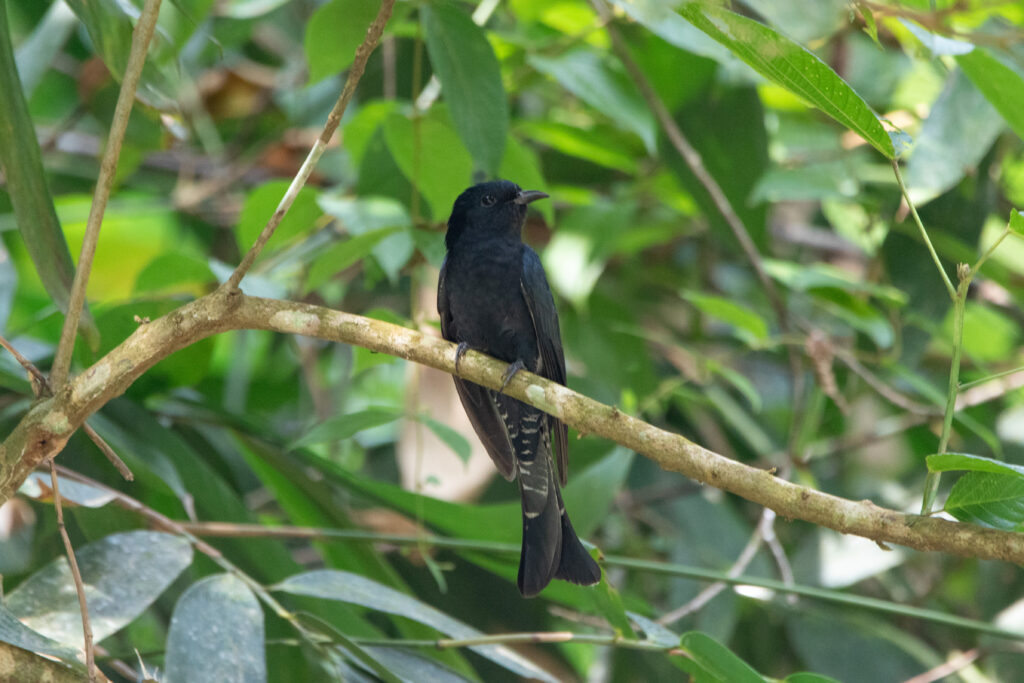
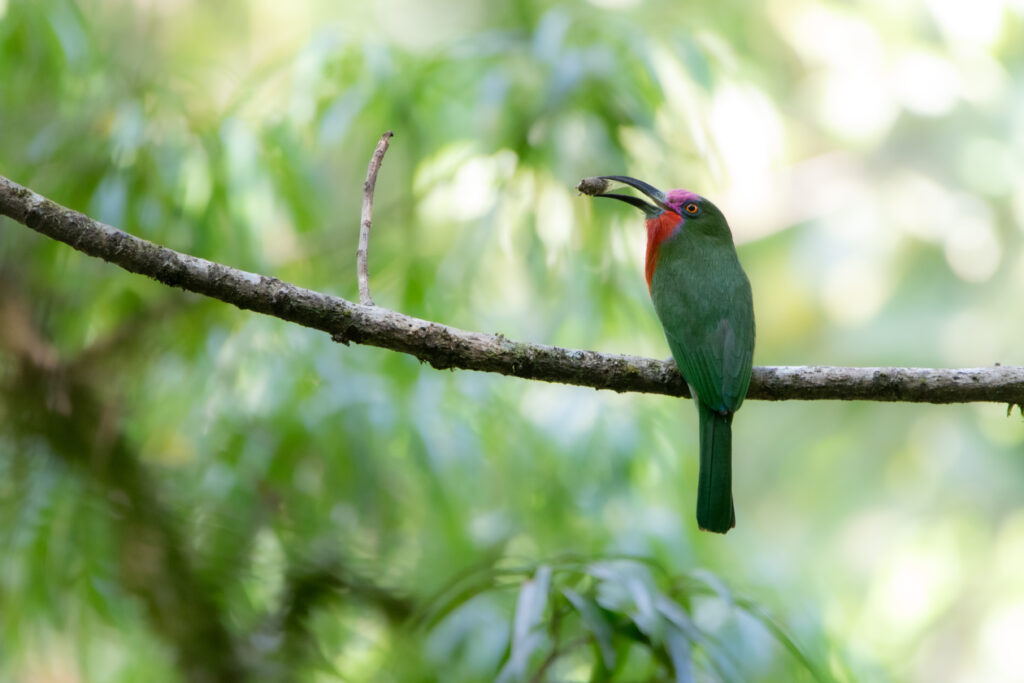
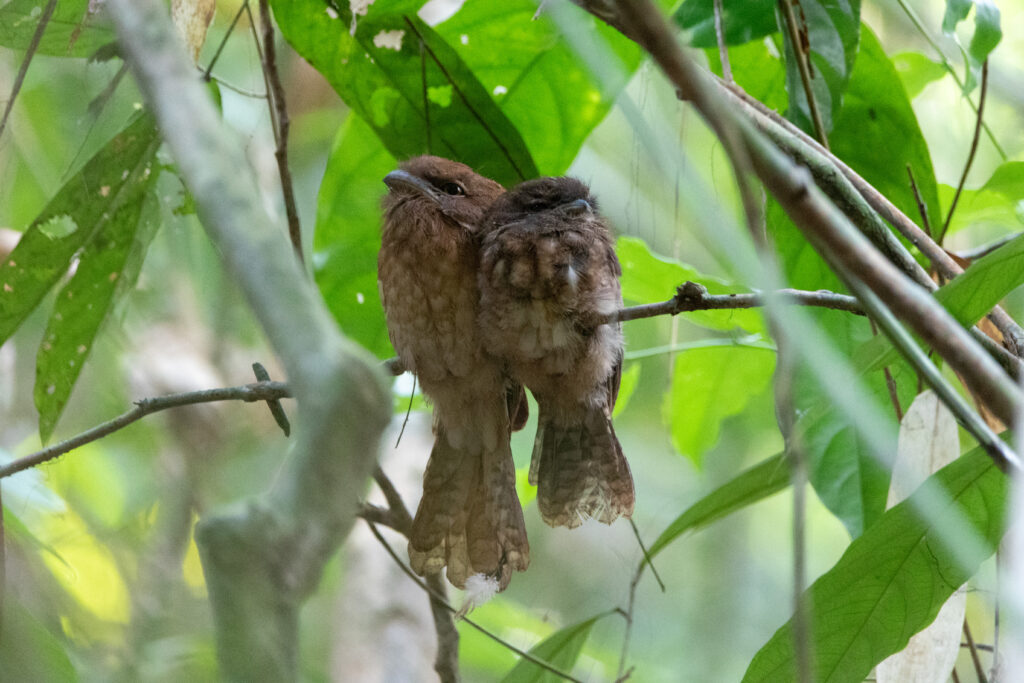
In the tall trees on the opposite side of the river, it is possible to see Wreathed Hornbill (Rhyticeros undulatus) or Bushy-crested Hornbill (Anorrhinus galeritus). If you meet a park ranger, you can politely ask if he knows of a daytime roost for Gould’s Frogmouth (Batrachostomus stellatus).

Picnic area and toilets
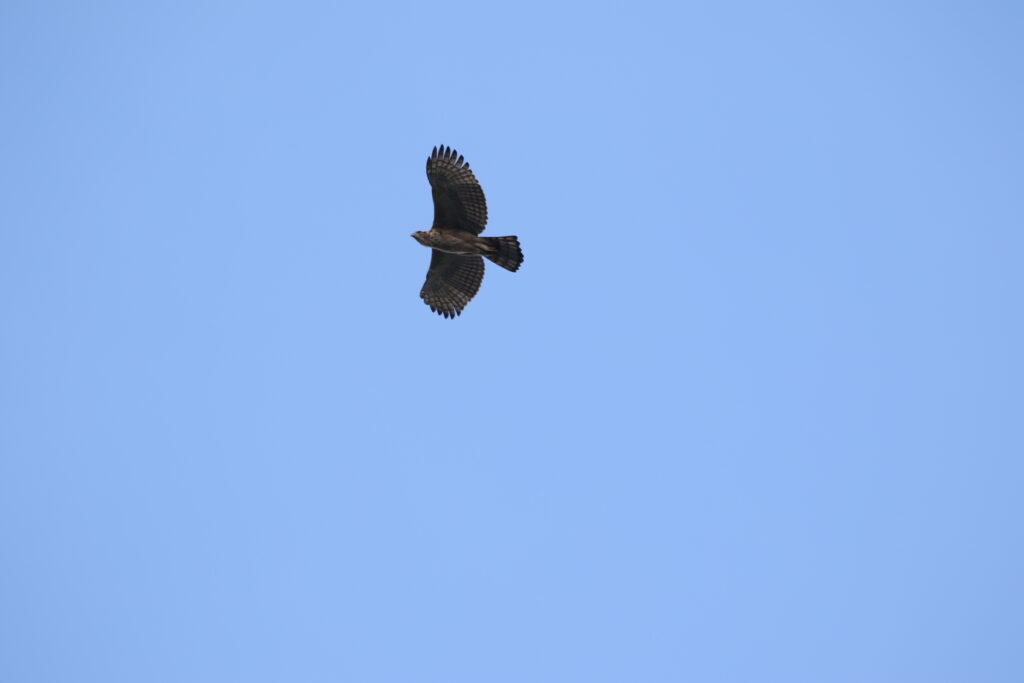
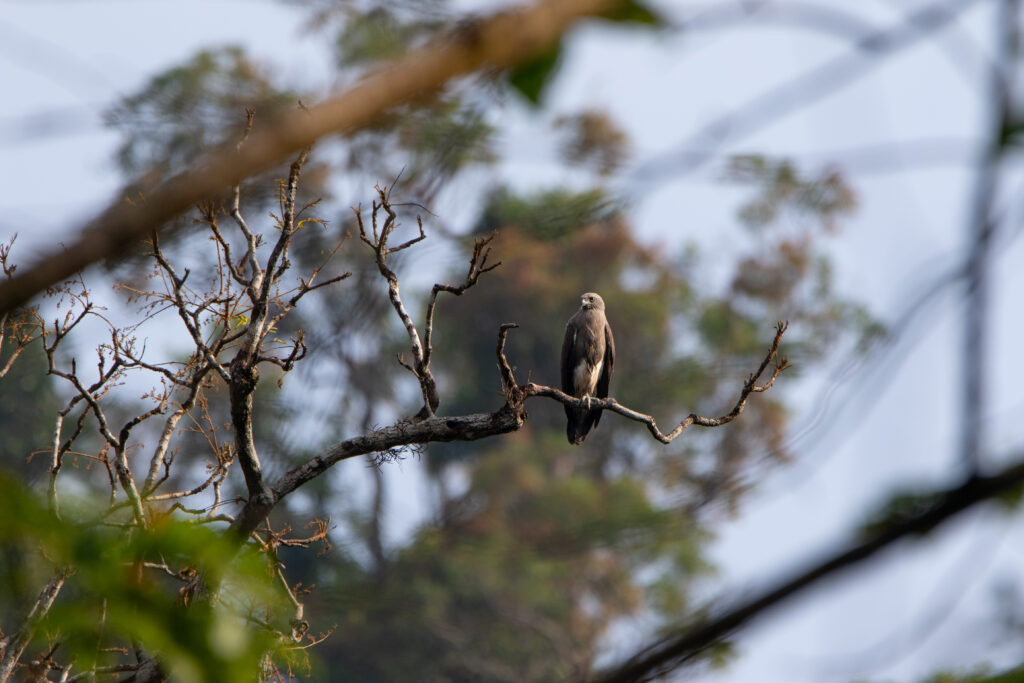
At the end of the main trail, you arrive at a picnic area surrounded by a stream (4). In one of the trees on the left, it is possible to observe the Lesser Fish Eagle (Icthyophaga humilis), which nests here. Wallace’s Hawk Eagle (Nisaetus nanus) also occasionally roams in the area.
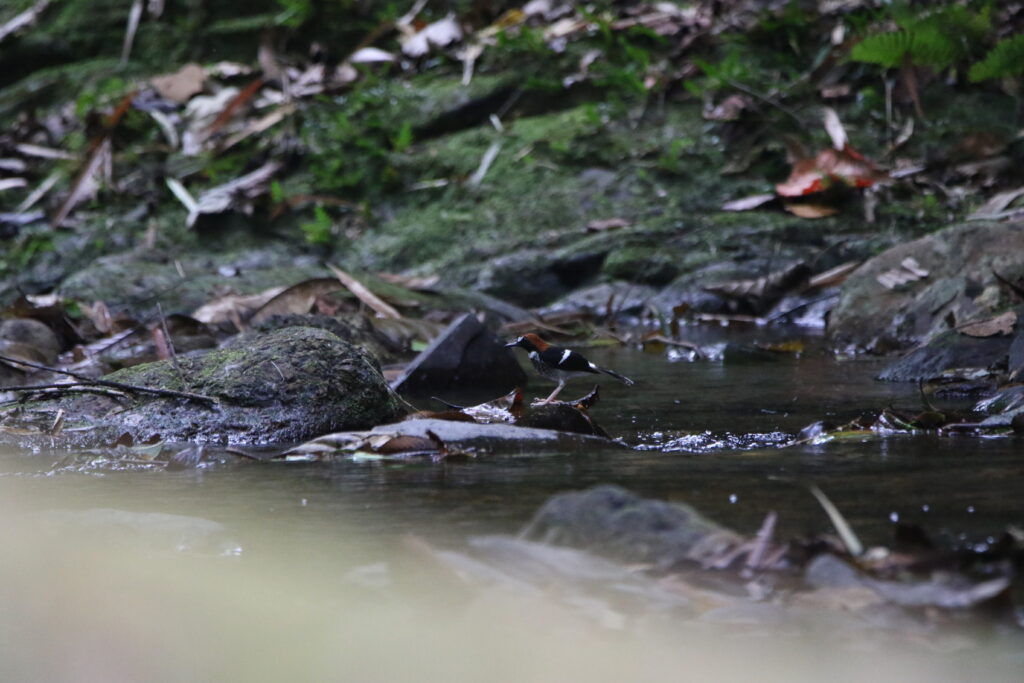
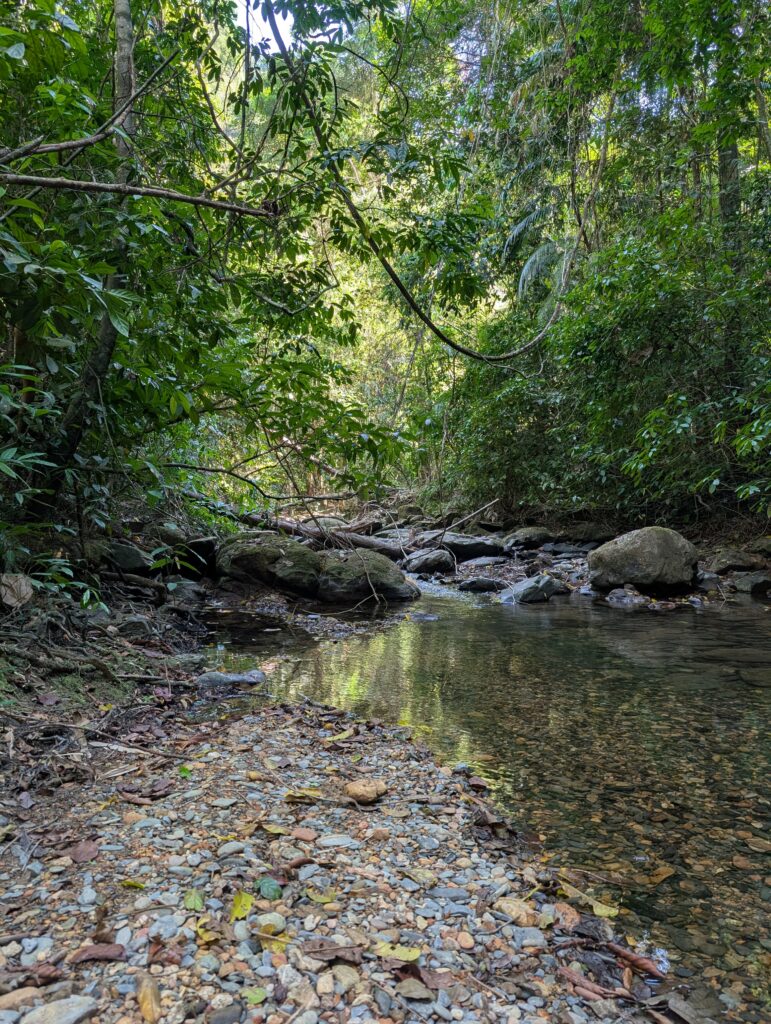
If you sit quietly along the stream, you may hope to see the Forest Wagtail (Dendronanthus indicus), the Grey Wagtail (Motacilla cinerea), or, with some luck, the Chestnut-naped Forktail (Enicurus ruficapillus).
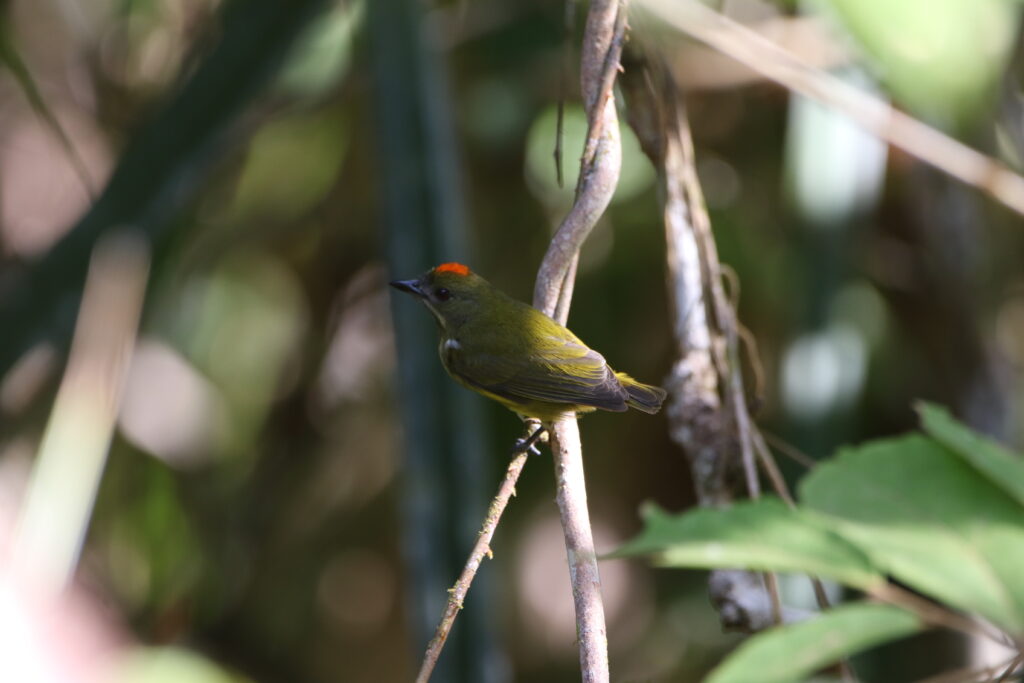
Finally, fruiting and flowering trees can attract, in addition to the bulbuls mentioned earlier, the Orange-bellied Flowerpecker (Dicaeum trigonostigma), Scarlet-backed Flowerpecker (Dicaeum cruentatum), Crimson-breasted Flowerpecker (Prionochilus percussus), and Yellow-breasted Flowerpecker (Prionochilus maculatus), as well as the Little Spiderhunter (Arachnothera longirostra) and Grey-breasted Spiderhunter (Arachnothera modesta).


Nature trails
In addition to the park’s main road, there are four trails to explore: Flycatcher Trail, Steep Trail, Pitta Trail, and Waterfall Trail.
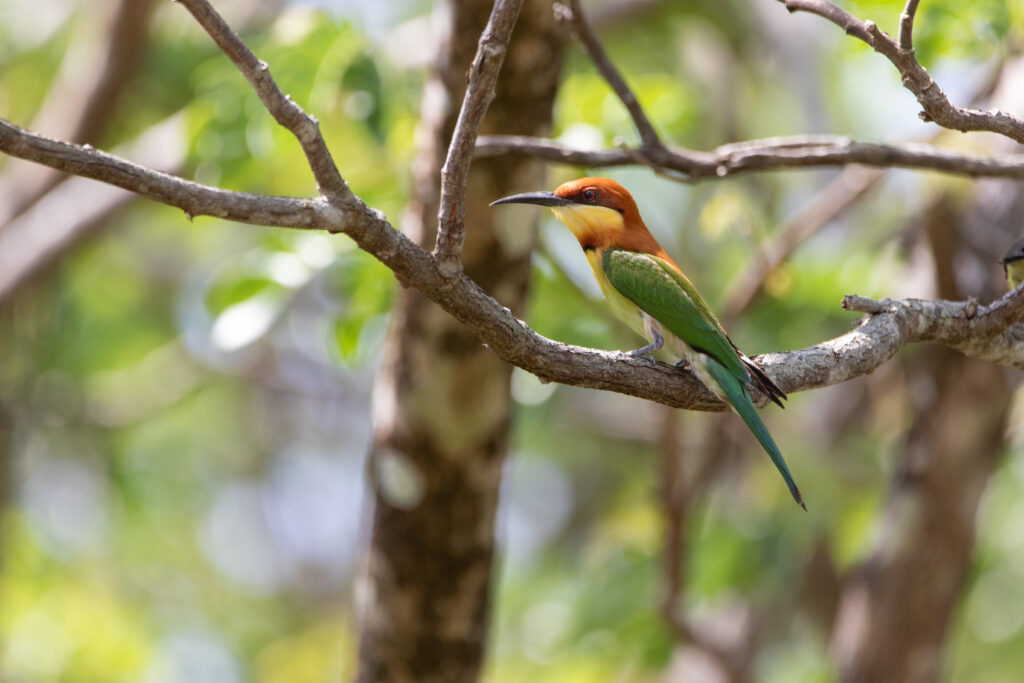
Along the trail leading to Tam Nang Waterfall (5), the open view above the river allows you to observe Edible-nest Swiftlet (Aerodramus fuciphagus), Grey-rumped Treeswift (Hemiprocne longipennis), Whiskered Treeswift (Hemiprocne comata), and Chestnut-headed Bee-eater (Merops leschenaulti). On the opposite bank, look for the Red-billed Malkoha (Zanclostomus javanicus).



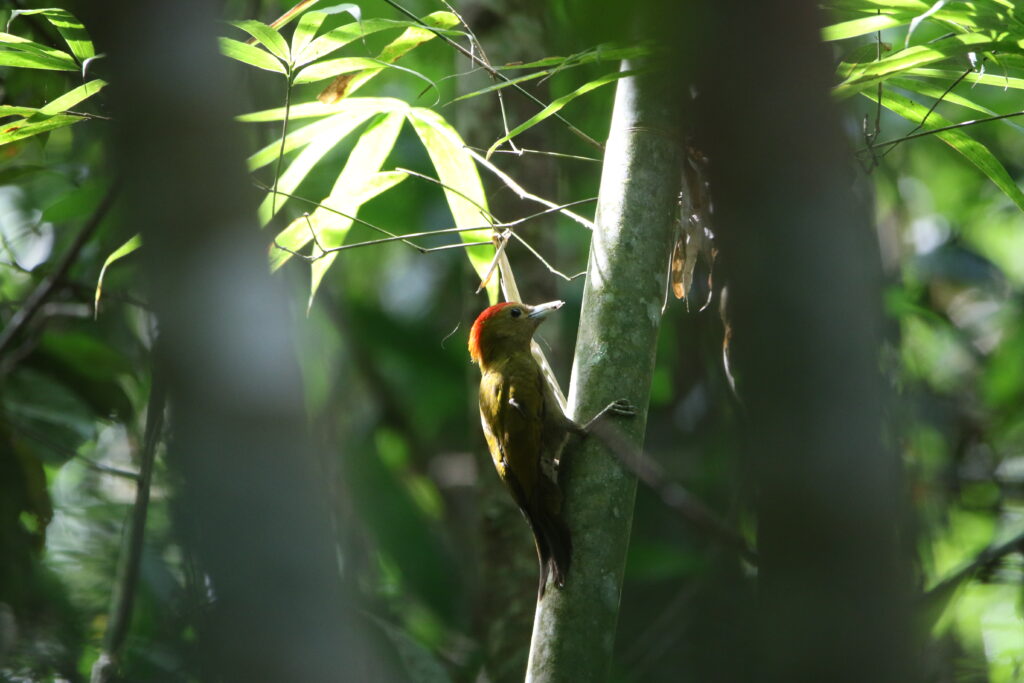
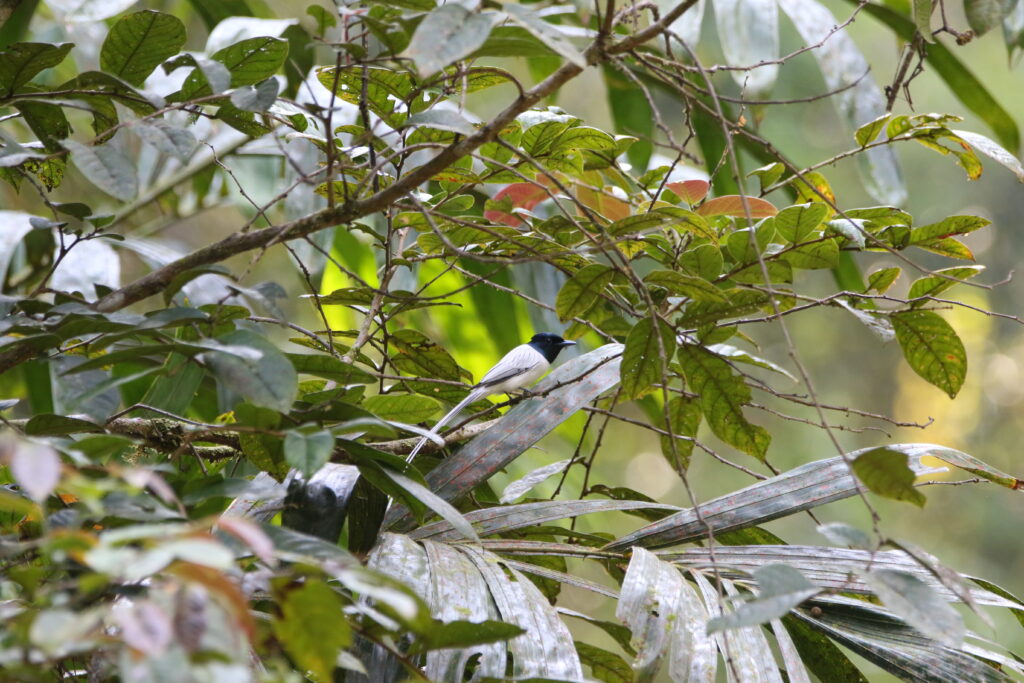
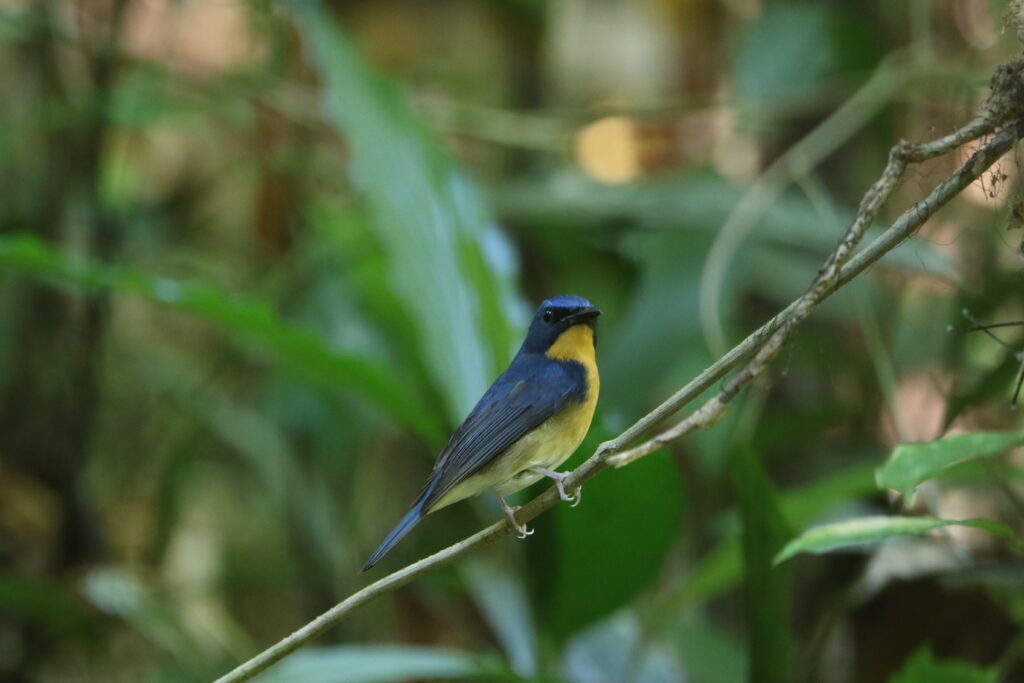
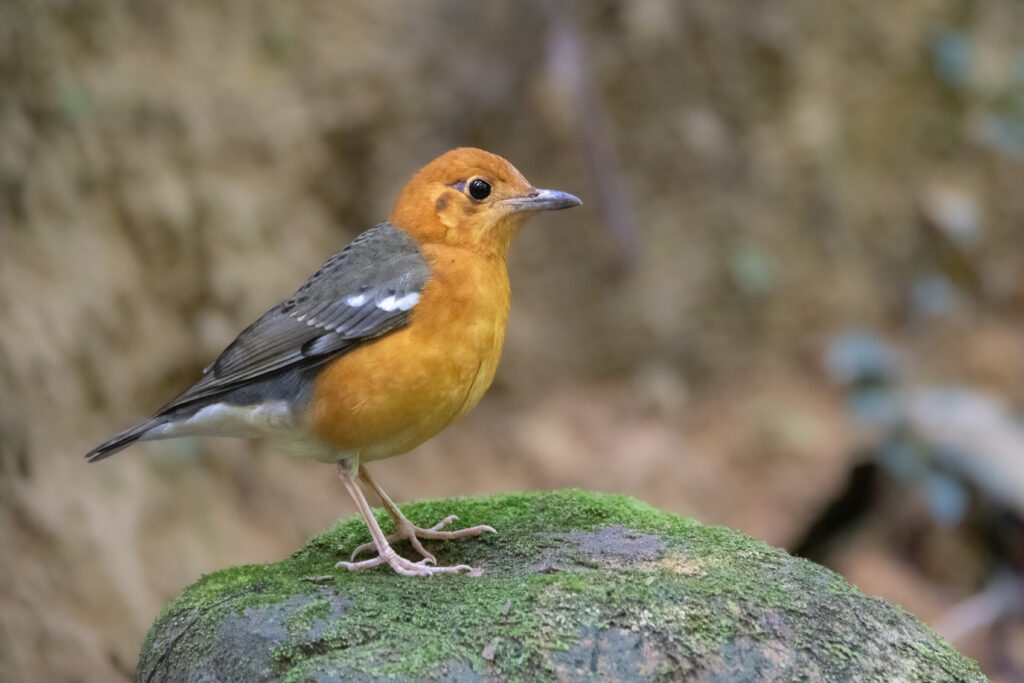
At the beginning of the Pitta Trail toward Ton Deng Waterfall (6), you will find a feeding station designed to observe the Orange-headed Thrush (Geokichla citrina), as well as the Asian Brown Flycatcher (Muscicapa dauurica) and the Large Blue Flycatcher (Cyornis magnirostris). In the dense forest that follows, you can search for Blyth’s Paradise Flycatcher (Terpsiphone affinis), Black-naped Monarch (Hypothymis azurea), Buff-rumped Woodpecker (Meiglyptes grammithorax), and Bamboo Woodpecker (Gecinulus viridis).

How to get to Sri Phang Nga?
By car, it’s very simple, just head to the point indicated below using a GPS.
By public transport, the easiest way is to first take a bus to the Takua Pa terminal. You can get there from Surat Thani or Krabi. From there, you’ll need to ask a songthaew to drop you at the park entrance (about 35 minutes). Another option is to take a bus heading north to Ranong, which will drop you about 4 km from the park entrance.
Where to stay in Sri Phang Nga?
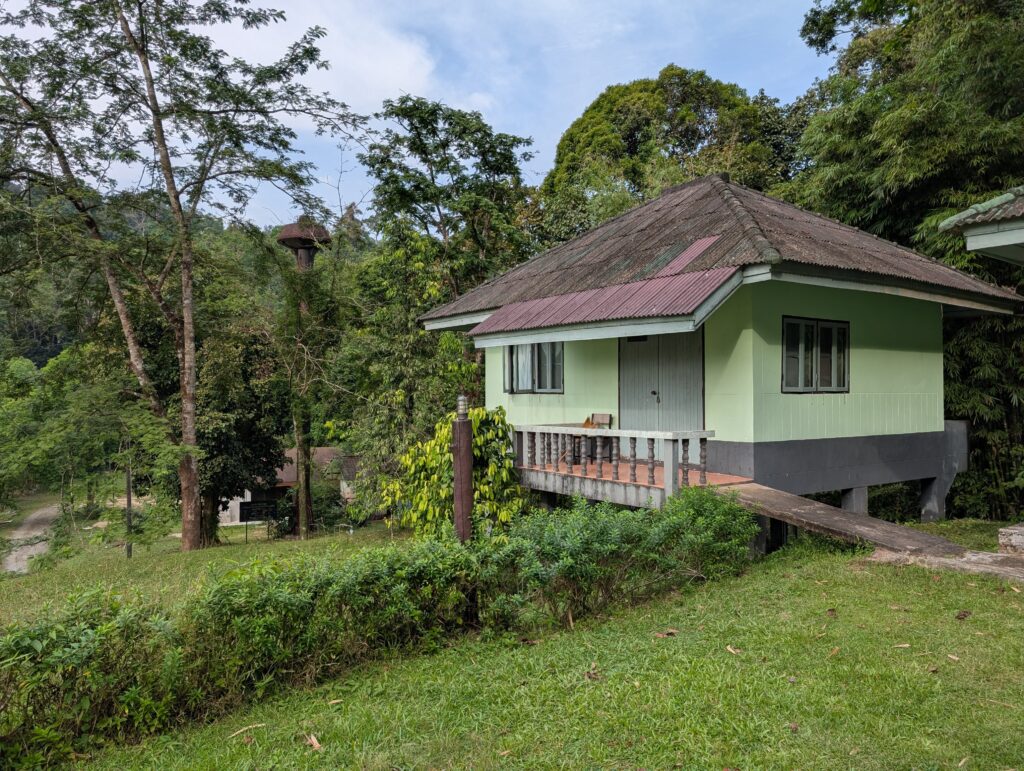
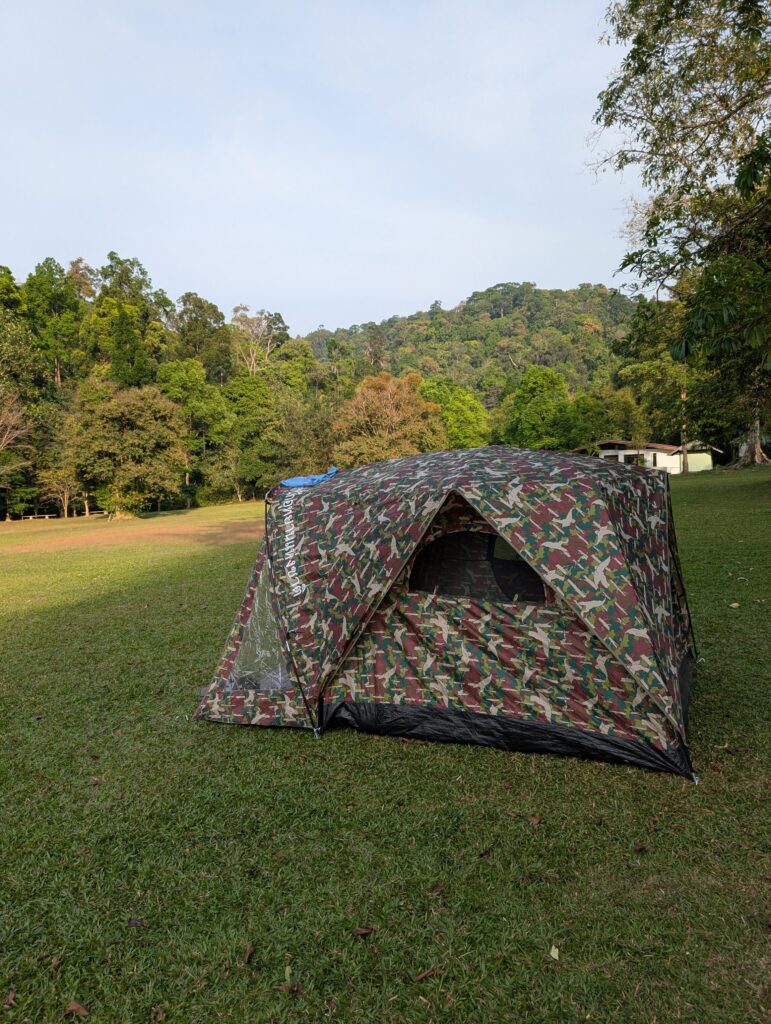
To explore the national park in depth, the easiest option is to stay inside the park itself. Two choices are available: renting bungalows or renting tents with mattresses, pillows, and sleeping bags. If you choose the latter, the tent is set up by the park rangers. Reservations can be made online (http://nps.dnp.go.th/reservation.php?id=34), by email (reserve@dnp.go.th), or directly on site (hoping it’s not fully booked).
Note: If you don’t have a vehicle, there is only one canteen inside the park (open from 8 a.m. to 5 p.m.). You need to reserve your dinner during the midday break. The park is open from 8 a.m. to 6 p.m. Birdwatching is possible before 8 a.m. around the park headquarters.